Abstract :
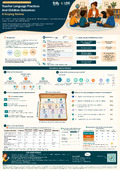
[en] Background. Classroom interaction and teachers’ oral language practices are widely recognised as important supports for children’s language development and learning. However, evidence, is spread across disciplines (education, psychology, applied linguistics, speech and language therapy, and neuropsychology), using heterogeneous constructs and measurement approaches. . This breadth is a strength, but it may also make synthesis and cross-study comparison difficult. The present scoping review maps empirical research linking teachers’oral language practices to children oral language outcomes and/or academic learning fom preschool through primary school, and documents how practices and outcomes are defined and measured.
Methods. A protocol was preregistered on OSF (https://osf.io/az7mr) and the review is conducted following PRISMA-ScR reporting and JBI guidance. Searches were carried out in ERIC/Ovid, PsycInfo/Ovid, LLBA/ProQuest, and Scopus/Elsevier, with additional targeted searches in Google Scholar. Eligibility criteria were : a) empirical study; b) conducted in classroom settings (early years and/or primary) ; c) includes an operationalised measure of teachers’ oral language practices (teacher talk and/or teacher/pupil interaction), d) includes at least one child outcome related to oral language development and/or learning. No restrictions were applied regarding geography or study language. A structured extraction grid captured : study characteristics, school context, teacher characteristics, teachers' language practices, children measures (outcomes), interventions targets and main results.
Results. Data extraction is complete for 135 studies. The synthesis will map the range of teacher oral language practices examined in classrooms and the outcomes considered, spanning language development, curriculum learning, and broader learning-related skills.
Conclusions. The review will deliver an evidence map of constructs, measures and practice-outcome linkages, highlight methodological convergences and divergences across fields, and identify under-researched practice–outcome combinations, contexts, and populations across continents and languages. This synthesis is intended to inform the selection of intervention targets, support evidence-informed educational practice and speaks directly to themes of input, interaction, and environment and educational practice and policy in child language research.