Developmental language disorder; DLD; Lexical assessment; Static assessment; Dynamic assessment; Item response theory
Abstract :
[en] Background: Lexical comprehension and production are fundamental to effective communication (Ebbels et al., 2022) and therefore constitute a key element of speech and language assessment in children with developmental language disorder (DLD). Research indicates that children with DLD experience persistent difficulties in acquiring, consolidating, and appropriately using vocabulary (McGregor et al., 2020). Moreover, vocabulary assessment is highly sensitive to environmental factors, which can introduce interpretative bias and increase the risk of over- or under-diagnosis of DLD. Dynamic assessment (DA), which emphasizes learning potential rather than static knowledge, has been identified as a promising approach to reduce such biases (Kan & Windsor, 2010). However, there is currently no validated French-language dynamic vocabulary assessment using real words. This lack of standardized instruments limits the use of DA among French-speaking speech-language pathologists (Delage et al., 2021). Additional barriers include the increased time demands associated with DA procedures (Denman et al., 2021).
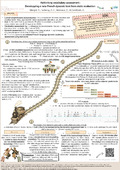
The aim of this poster is to present the methodology used to develop a vocabulary assessment task integrating static and dynamic assessment, drawing on Item Response Theory (IRT), to help clinicians differentiate between vocabulary weaknesses resulting from limited environmental exposure and deficits related to DLD.
Methods: A new DA task using a test-teach-retest paradigm was developed. Lexical item selection was informed by children’s performance on a static expressive vocabulary assessment. This poster presents an approach that enables adaptive item selection for the DA task, tailored to each child’s estimated ability level.
Results: The static expressive vocabulary assessment was administered to 303 typically developing children from kindergarten through fifth grade. Based on these outcomes and using IRT, item difficulty was estimated, and the probability of correct item naming was calculated by integrating item difficulty with individual ability estimates. These probabilities were subsequently used to determine which lexical items would be included in the dynamic assessment task.
Conclusions: This poster presents the methodological process for integrating static and dynamic assessment approaches to evaluate children’s learning potential for previously unknown words. Future directions regarding the application of this combined static-dynamic lexical assessment approach will be discussed.
Disciplines :
Speech and language therapy
Author, co-author :
Menjot, Pauline ; Université de Liège - ULiège > Département de Logopédie