Abstract :
[en] In light of the ongoing emergence of new SARS-CoV-2 variants and the continued vulnerability of certain populations, the rapid development of antiviral agents administrable at the earliest stages of infection remains a critical priority. Among potential therapeutic targets, the transmembrane serine protease 2 (TMPRSS2) has attracted particular attention. This host protease facilitates the cellular entry of several respiratory viruses, including SARS-CoV, MERS-CoV, SARS-CoV-2, and other human coronaviruses responsible for seasonal infections. Given its recurrent use by several viral strains, TMPRSS2 inhibition represents a promising strategy for the development of broad-spectrum antivirals, potentially useful against future coronavirus outbreaks.
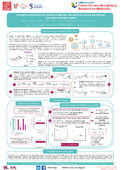
In this context, we designed and synthesized a series of phenyl ester derivatives of coumarin-3-carboxylic acid bearing basic functional groups on the phenyl ring with the aim of inhibiting TMPRSS2. Around forty compounds bearing chloromethyl or acetoxymethyl substituents at the 6-position of the coumarin core were synthesized. The position, nature and spacing of the basic groups on the phenyl ring were systematically varied in order to explore their influence on TMPRSS2 inhibition. The inhibitory potency of these derivatives was determined using purified TMPRSS2 in enzymatic assays.
Several compounds exhibited promising inhibition profiles at low micromolar and were further investigated to elucidate their mechanisms of action. Interestingly, two positional isomers with the same basic function on the phenyl ring exhibited different inhibition mechanisms (irreversible and reversible covalent inhibitors), depending on the spatial arrangement of the substituent.
Further studies will be conducted using advanced analytical techniques, including mass spectrometry and X-ray crystallography, to investigate how the position and nature of substituents influence interactions with TMPRSS2. This will provide insight into why positional changes can lead to distinct inhibition mechanisms. Simultaneously, the most active compounds will be evaluated for their antiviral activity against different viral strains, in order to assess their therapeutic potential. Taken together, these results will confirm the potential of targeting TMPRSS2 for use in a broad-spectrum antiviral context. Meanwhile, the current findings indicate that coumarin derivatives represent a promising chemical scaffold for further development.