Keywords :
Strychnos variabilis, SARS-CoV-2, chemodiversification, late-stage functionalisation
Abstract :
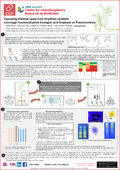
[en] Strychnos variabilis De Wild. is a small deciduous tree native to the regions in and around Brazzaville and
Kinshasa, situated on both banks of the Congo River in Africa. Despite its geographical prevalence, S.
variabilis leaves were found to contain only trace amounts of indoline alkaloids, particularly from the retuline
series. However, our laboratory, over the past three decades, isolated a plethora of rare flavonoids, including
flavonol glycosides, from these leaves (Brasseur and Angenot, 1987). Flavonoids, renowned for their antiviral
properties, particularly in glycosidic form, have garnered interest due to their enhanced solubility and
efficacy. Therefore, our study sought to explore the potential antiviral activity of S. variabilis leaves against
SARS-CoV-2. Initial findings indicated significant antiviral activity in the total extract, with an IC50 range
of 12.5 to 6.25 µg/mL. Encouragingly, our investigation into two specific flavonoids, variabilosides C and
D, revealed even greater potency, with an IC50 range of 6.25 to 3.12 µg/mL. Building upon these promising
results, we adopted late-stage functionalization (LSF) strategy through photochemistry (Pitre and Overman,
2022) to chemodiversify S. variabilis extracts. LSF may alter functions already present in the structure, but
more importantly it is able to target the C–H bonds of drug leads as points of diversification for generating
new analogs. Thus, chemodiversification was achieved and preliminary insights were obtained. The antiviral
activity of these modified extracts against SARS-CoV-2, were correlated with these modifications. In
conclusion, our study highlights the efficacy of photochemistry in expanding the chemical space of natural
products, offering innovative solutions for drug discovery and development.