Poster (Scientific congresses and symposiums)
Bioguided fractionation of Artemisia annua: identification of casticin as an anti-melanoma agent
Jullien, Kateline; Hamann, Carla; Delava, Laura et al.
2026 • 74th International Congress and Annual Meeting of the Society for Medicinal Plant and Natural Product Research (GA)
Peer reviewed
 

Files


Full Text
Poster fractionnement bioguidé.pdf
Author postprint (1.12 MB)
Request a copy

All documents in ORBi are protected by a user license.

Send to


Details


Keywords :
melanoma; Artemisia annua; casticin; compound isolation
Abstract :
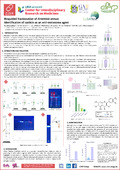
[en] Metastatic melanoma remains a major global health challenge. Despite advances in surgical, radiotherapeutic, and immunological approaches, drug therapy is still central. However, its clinical efficacy is often limited by drug resistance and severe toxic side effects. Although recents advances in targeted immunotherapies have slightly reduced mortality, durable responses remain rare and acquired resistance is inevitable [1]. Consequently, identifying novel bioactive compounds is imperative. In this search, for alternatives, Artemisia annua has emerged as a potential candidate due to its reported ability to induce cell deaths [2]. Through bio-guided fractionation of the plant extract, this study aimed to isolate and identify the compound(s) responsible for anti-proliferative activity against the human A375 metastatic melanoma cell line. A methanolic extract underwent three successive separation steps: liquid-liquid extraction, dry column vacuum chromatography (DCVC), and preparative thin-layer chromatography (prep TLC). Metabolic assays guided the process, identifying the dichloromethane fraction from L-L extraction as the most active. Fraction 5 from DCVC was then selected, leading to a final subfraction from prep TLC with an IC50 < 2.5 µg/mL (Fig.1. a). Within this fraction, casticin was identified via UPLC-qDa and NMR as the main bioactive compound (IC50 = 0.085 ± 0.03 µg/mL). Furthermore, casticin displayed a selective antiproliferative activity (Selectivity Index = 12,824), showing limited effects on normal dermal fibroblasts (Fig.1. b). These findings highlight casticin as a potent anti-proliferative molecule, with an interesting in vitro activity against A375 melanoma cells. The observed selectivity suggests that casticin warrants further investigation as a potential bioactive lead in melanoma research.
Disciplines :
Pharmacy, pharmacology & toxicology
Author, co-author :
Jullien, Kateline  ;  Université de Liège - ULiège > Unités de recherche interfacultaires > Centre Interdisciplinaire de Recherche sur le Médicament (CIRM)
Hamann, Carla  ;  Université de Liège - ULiège > Unités de recherche interfacultaires > Centre Interdisciplinaire de Recherche sur le Médicament (CIRM)
Delava, Laura ;  Université de Liège - ULiège > Faculté de Médecine > Master spéc. pharma. hosp. (Partenaire)
Lahngong, Methodius Shinyuy  ;  Université de Liège - ULiège > Unités de recherche interfacultaires > Centre Interdisciplinaire de Recherche sur le Médicament (CIRM)
Frederich, Michel  ;  Université de Liège - ULiège > Département de pharmacie > Pharmacognosie
Maquoi, Erik  ;  Université de Liège - ULiège > Département des sciences biomédicales et précliniques
Ledoux, Allison  ;  Université de Liège - ULiège > Département de pharmacie > Pharmacognosie
Language :
English
Title :
Bioguided fractionation of Artemisia annua: identification of casticin as an anti-melanoma agent
Publication date :
01 September 2026
Event name :
74th International Congress and Annual Meeting of the Society for Medicinal Plant and Natural Product Research (GA)
Event date :
August 30 to September 2
Audience :
International
Peer review/Selection committee :
Peer reviewed
Available on ORBi :
since 01 October 2026

Statistics


Number of views
11 (0 by ULiège)
Number of downloads
0 (0 by ULiège)

Bibliography


Similar publications


Contact ORBi