Biocontrol; Zymoseptoria tritici; Essential oils; Antifungal activity; mode of action
Abstract :
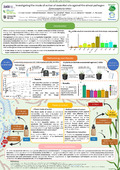
[en] Zymoseptoria tritici, the causal agent of Septoria tritici blotch, is one of the most frequently occurring fungal pathogens on wheat crops worldwide, causing yield losses of up to 50% when the environmental conditions are suitable for disease development. Currently, the management of this pathogen relies mainly on synthetic fungicides. However, due to their negative effects on both the environment and human health, and the frequent development of fungicide resistance, looking for sustainable disease control methods is strongly encouraged. Biocontrol of plant pathogens using plant-derived metabolites is one of the most promising alternative tools. Here, we assessed the potential activity of six essential oils and their major compounds against Zymoseptoria tritici. The experiments were performed in vitro in liquid glucose peptone medium amended or not with different concentrations of each essential oil and major compound. From the obtained dose-response curves, minimum inhibitory concentration (MIC) and half-maximal inhibitory concentration (IC50) was determined for each essential oil and major compound. The results revealed that the antifungal activity varies depending on the essential oil and major compound, with IC50 values ranging from 41.6 mg/L to 677 mg/L. Moreover, mycelia exposed to the essential oils and major compounds provoked an increase of relative conductance in the media which can be linked to an increase in membrane permeability. Assays to further characterize the modes of action of the most promising essential oils and their major compound are in progress to identify the biological targets of botanicals on the pathogen. Ultimately, protection assays on the most promising essential oil and major compound with an advanced formulation are planned to assess the biocontrol efficacy of the selected botanicals on Z. tritici for future field applications. This study highlights the potential of botanicals for the biocontrol of Z. tritici.
Research Center/Unit :
University of Liège, UMRt BioEcoAgro 1158-INRAE, Plant Specialized Metabolites