Abstract :
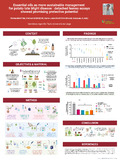
[en] Potato (Solanum tuberosum) plays a crucial role in global food security, as the most im-portant non-cereal crop for human consumption. Its main threat remains the oomycete Phytophthora infestans which causes late blight disease. While synthetic pesticides still count as effective disease control despite increasing appearances of resistance, it also depletes natural resources, pollutes water, and threatens human and ecosystems health. Therefore, new and more sustainable alternatives for crop protection must be urgently developed. In this context, this study explores the use of essential oils (EOs) - which are complex mixtures of volatile and hydrophobic plant secondary metabolites – as a bio-sourced alternative against Phytophthora infestans.
For this purpose, five different EOs were selected and analyzed by GC-MS. Their chemical profiles were distinguished on two groups: terpenoids - mainly found in bergamot and rosemary EO whereas oregano, cinnamon and clove contained molecules from the phe-nylpropanoid metabolic pathway.
To evaluate their anti-oomycete potential, EOs were emulsified in water using Tween 20 and tested in vitro against three P. infestans genotypes (EU-13-A2, EU-36-A2, and EU-37-A2). Oils rich in phenylpropanoids completely inhibited both mycelial growth (MIC on Pe-tri dish) and spore germination (IC50 on microplates) at concentrations starting from 1 µL mL⁻¹, showing significantly higher efficacy than terpene-rich oils.
Before validating these results under more realistic conditions, the appropriate host-pathogen couple had to be selected. Through ex vivo assays on detached potato leaves a gradient of susceptibility among three potato varieties (Bintje, Fontane, and Carolus known to exhibit respectively no, low, and high resistance to late blight) was implement-ed. The observations supported how varietal selection and genotype diversity modulates infection severity. Then, phytotoxicity assessments did not show any visible lesions nor significant decreases in chlorophyll fluorescence under 2.5 µL of EO per mL of emulsion, although chlorosis appeared at higher doses. Finally, efficacy tests were conducted to quantify the protective effects of the most promising EOs against early symptoms of late blight. Preliminary results revealed no significant difference between EO treatments and the conventional copper sulfate solution. Further in planta experiments are still required to determine whether similar protective effects can be achieved at the whole-plant level under semi-controlled conditions.
In parallel, the impacts of major EO compounds were investigated at the cellular level in P. infestans. Rapid alterations in membrane permeability along with acute intracellular reactive oxygen species production were identified as potential modes of action, occur-ring within two hours after EO exposure on both spores and mycelium.
These findings, combined with appropriate formulation, bring the selected essential oils as a potential source of effective and less-toxic biofungicides.