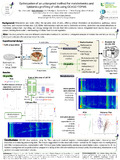
[en] Metabolomics and lipidomics offer complementary insights into cellular physiology. Metabolomics captures core metabolism, while lipidomics reveals changes in membranes, signaling, and energy storage. However, studies often isolate one domain, limiting comprehensive understanding. This study compares derivatization methods for untargeted analysis of metabolites and FAME. Human A549 lung epithelial cells were cultured and aliquoted into samples (one million cells each). A biphasic extraction method with chloroform, methanol, and water, was used. Chloroform phases were analysed using
three FAME derivatization methods: microwave-assisted methylation, BF₃-catalysed two-step esterification, and TMSH methylation. Methanolic phases were treated with methoxamine followed by derivatization using either MSTFA or BSTFA reagents. Each derivatization method was also performed directly on cells in culture medium. GC×GC data were processed using the Tiles approach, which segments chromatograms in a targeted manner. This method facilitated the comparison of lipids and metabolites across sample classes, enhancing trend detection and reducing overall processing time. When comparing all FAME derivatization strategies, 300 features were found to be statistically discriminant. All methods exhibited slightly different profiles, with the microwave-assisted method
providing more information. Fewer than 30 compounds were statistically discriminated between the cells in the chloroform extract and those directly in the DMEM medium. Regarding the preliminary results from the two metabolomics methods, over 400 features were found to be statistically discriminant, with approximately 100 showing significant differences between the BSTFA and MSTFA protocols. When comparing results obtained directly from the medium containing cells with those from the methanolic extract, only 46 compounds were identified as statistically discriminant. Of these, about 10 were found to be significantly different between the medium and the methanolic phase.
Disciplines :
Chemistry
Author, co-author :
Bensaada, Djulia ; Université de Liège - ULiège > Département de chimie (sciences) > Chimie analytique, organique et biologique
Albendea, Paula ; Université de Liège - ULiège > Département GxABT > Chemistry for Sustainable Food and Environmental Systems (CSFES)
Rodrigues, Anaïs ; Université de Liège - ULiège > Département de chimie (sciences) > Chimie analytique, organique et biologique
Pierret, Damien ; Université de Liège - ULiège > Département GxABT > Chemistry for Sustainable Food and Environmental Systems (CSFES)
Dejong, Thibaut ; Université de Liège - ULiège > Département de chimie (sciences) > Chimie analytique inorganique
Maillard, Bastien; ULiège - University of Liège > Département de chimie (sciences) > Chimie analytique, organique et biologique
Focant, Jean-François ; Université de Liège - ULiège > Département de chimie (sciences) > Chimie analytique, organique et biologique