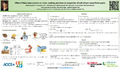
[en] Pasta is traditionally made from hard wheat (Triticum durum) due to its improved textural properties compared to soft wheat (Triticum aestivum), which has inferior sensory attributes and cooking quality. However, hard wheat accounts for only 5% of the global wheat production. As a widely consumed food, pasta can improve the dietary intake. To enhance the nutritional value of pasta, pulses’ flour can be incorporated. In food industry, faba bean is highly valued due to its sustainability as a protein-rich source (23-41% on a dry basis). This pulse can be combined with soft wheat flour to replace hard wheat flour in fresh pasta formulation. The objective of this study is to investigate the production of fresh pasta using soft wheat and the impact of supplementing it with faba bean fractions, on chemical, textural and cooking properties.
Pasta samples including different percentages of faba bean fractions to soft wheat flour (0 to 30%) were produced.
The results showed that the addition of faba bean fractions led to slight modifications in cooking properties. It increased the cooking time (from 4 to 7-9 min), cooking loss (from 3.7 to 4.5-5.8%), water index (from 83.1 to 96.2-105.3%), and improved the pasta color. Additionally, the protein content increased from 12.5 to 18.4-21.3% (on a dry basis). The ash content increased also by approximately 40%. Notably, the pasta containing faba bean showed lower textural changes compared to wheat-only pasta. The integration of faba bean improved the pasta hardness, increasing it up to 76%, while maintaining most of the other textural properties. The association of faba bean-soft wheat in pasta formulation as an alternative to hard wheat for non-dried pasta appears to be a promising way to increase the availability of locally sourced food for pasta consumption.
Research Center/Unit :
SMARTECH - Smart Technologies for Food and Biobased Products - ULiège
Disciplines :
Food science
Author, co-author :
Boukraâ, Mariem ; Université de Liège - ULiège > TERRA Research Centre > Technologie Alimentaire (TA)
Dumoulin, Lionel ; Université de Liège - ULiège > TERRA Research Centre
Moreaud, Alissa; Food Science and Formulation, University of Liège
Jacquet, Nicolas ; Université de Liège - ULiège > TERRA Research Centre > Technologie Alimentaire (TA)
Malumba Kamba, Paul ; Université de Liège - ULiège > TERRA Research Centre > Technologie Alimentaire (TA)
Richel, Aurore ; Université de Liège - ULiège > TERRA Research Centre > Chemistry for Sustainable Food and Environmental Systems (CSFES)
Blecker, Christophe ; Université de Liège - ULiège > TERRA Research Centre > Technologie Alimentaire (TA)
Language :
English
Title :
Effect of faba bean content on color, cooking and textural properties of soft wheat-based fresh pasta