Abstract :
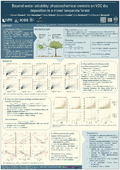
[en] Volatile organic compounds (VOCs) play a key role in atmospheric chemistry by contributing to tropospheric ozone and secondary organic aerosol formation and by modulating the atmospheric lifetime of methane. Although the majority of atmospheric VOCs originate from biogenic emissions, dry deposition to ecosystems is increasingly recognized as an important sink influencing global budgets. While deposition processes have been quantified for a limited number of highly water-soluble VOCs, they remain poorly constrained for many other compounds.Using a PTR-ToF-MS instrument, we measured VOC concentrations and fluxes above and below the canopy at the mixed temperate forest ICOS station of Vielsalm (Belgium) over three growing seasons (spring to autumn) between 2022 and 2024 (Dumont et al., 2026). Minimal deposition velocities were derived from negative net fluxes, and a two-layer (canopy and soil) big-leaf resistive model was applied for conceptual interpretation.Above the canopy, significant deposition was detected for 47 VOC groups, identified by their mass-to-charge ratio (m/z) and spanning a wide range of physicochemical properties. Median deposition velocities ranged from 0.4 cm s⁻¹ for formic acid to 1.5 cm s⁻¹ for m/z 137.060 (C₈H₈O₂H⁺, aromatic OVOCs). Aerodynamic and quasi-laminar boundary layer resistances were negligible compared to the total resistance, while below-canopy uptake contributed only about 10% of the above-canopy deposition. This indicates that canopy processes represent the dominant regulation to VOC uptake.The widely used Wesely (1989) deposition scheme reproduced the observed deposition velocities only for a subset of highly water-soluble compounds, as indicated by their high Henry’s law constants (e.g. formaldehyde, formic acid, acetic acid, hydroxymethyl hydroperoxide). For most of these low-molecular-weight OVOCs, deposition increased with relative humidity and peaked in autumn, when humid conditions were most frequent.For many other VOCs, however, the Wesely model underestimated deposition by up to three orders of magnitude. Additional physicochemical properties were examined to account for the high deposition velocities of hydrophobic VOCs. Under dry conditions, deposition velocities were positively correlated with the octanol–air partition coefficient, used here as a proxy for solubility in lipid phases. This suggests uptake pathways not captured by current deposition models, such as dissolution into the waxy leaf cuticle or lipid membranes. Under wet conditions, this relationship weakened, and the Henry’s law constant emerged as the strongest predictor of deposition. These findings were supported by an independent VOC flux dataset acquired over a winter wheat field in the Paris region (Loubet et al., 2022), where a similar dependence on the octanol–air partition coefficient was observed.Overall, our results indicate that both aqueous and lipid reservoirs within vegetation can contribute to VOC dry deposition and should be treated as complementary uptake pathways. Building on these findings, this ongoing work will aim to extend existing deposition models to predict the uptake of both hydrophilic and hydrophobic organic compounds by ecosystems.
Funding text :
The authors wish to acknowledge the Belgian Federal Science Policy Office for their support to the ACTRIS-BE project (FSIRI/00/AC1) and the BIRA/ULiège FEDtWIN project BERTRAC (Prf-2021-034_BERTRAC#2) as well as the Public Service of Wallonia for their support to the ICOS-Wallonia project (1217769).