Abstract :
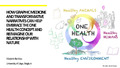
[en] One Health is a collaborative, multidisciplinary concept that recognises the interconnectedness of human, animal, and environmental health and promotes a global approach to health. It emphasises the need for collaboration across sectors such as human medicine, veterinary medicine, environmental science, and related fields (Prata et al., 2022).
As discussed in the work of Philippe Descola (Descola, 2013), humans should be encouraged to reevaluate Western-centric perspectives that portray humans as fundamentally distinct from nature. Holism and ecocentrism emphasise that humans are not separate from nature but are deeply interconnected with and dependent on it.
Understanding these connections differently within the One Health framework is crucial for addressing complex health challenges through a more comprehensive and holistic approach that acknowledges the dynamic interdependence of these systems.
However, the broader perspective of One Health—and the holistic approach it requires—is not always fully understood by healthcare professionals or students. To address this gap, a seminar for students at the University of Liège (Belgium) has been organised through collaboration between several faculties (medicine, veterinary medicine, medical humanities, and political science).
This one-day seminar combines Graphic Medicine with other narratives activities. After reading a graphic novel on a pandemic, students take part in a collective reading activity, which involves dividing a book into several parts according to the number of participants and reading it together. Once the One Health concept is fully understood, participants are invited to imagine possible future health scenarios inspired by the work of Rob Hopkins or Pablo Servigne (Hubbell, 2020).
In conclusion, the seminar aims to foster a deeper understanding of the holistic approach required to address complex health challenges such as One Health—by recognising the intricate connections between human, animal, and environmental health—through the combined use of Graphic Medicine and the transformative narratives.