Abstract :
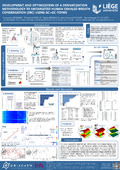
[en] Analysis of human breath for medical applications-such as biomarker discovery, biological process
characterization, and disease diagnosis-has become increasingly essential within the field of metabolomics.
Also known as breathomics, this discipline is vital for linking the complexity of volatile and semi-volatile
organic compounds (VOCs and SVOCs) in breath to their significant clinical value. A key sampling strategy
involves the collection of exhaled breath condensate (EBC) for further analysis, as it offers a non-invasive
nature, direct sampling, low risk, and operational simplicity. However, the water-based matrix and trace levels
of analytes necessitate additional sample treatment steps. Alternatively, derivatization is advantageous for
enhancing volatility and signal intensity, improving selectivity, and establishing comprehensive SVOC and
VOC profiles via comprehensive two-dimensional gas chromatography coupled with time-of-flight mass
spectrometry (GC×GC-TOFMS).
In this study, EBC derivatization was performed via methoximation of the dried sample with MeOX
(O-methylhydroxylamine hydrochloride) in pyridine, followed by silylation with MSTFA
(N-Methyl-N-trimethylsilyltrifluoroacetamide). EBC was collected from twelve patients with various
respiratory diagnoses. To facilitate the development and optimization phases, these individual samples were
pooled into a single representative matrix and subsequently characterized individually. Utilizing an improved
GC×GC-TOFMS methodology, a Plackett-Burman design of experiments (DoE) was applied to screen for
significant factors, while a Box-Behnken design was employed for the three most significant factors to
determine optimal derivatization conditions through response surface methodology (RSM). Under these
optimal conditions, the individual EBC samples were analyzed. As a result, this study provides a simple and
effective strategy for EBC analysis with significant analytical response and low sample consumption. The
characterization of this optimized method, alongside the evaluation of factor behavior during the derivatization
step, provides novel information not yet reported in the literature, serving as an essential foundation for the next
stages of human breath research [1,2].
References
[1] Bhatt K. et al., Int. J. Mol. Sci. 24 (2023) 9614
[2] Engel B. et al., Sep. Sci. Plus 3 (2020) 407-418
Disciplines :
Physical, chemical, mathematical & earth Sciences: Multidisciplinary, general & others