Abstract :
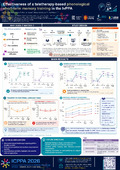
[en] Background The logopenic variant of primary progressive aphasia (lvPPA) is characterized by prominent phonological impairments and reduced phonological short-term memory (pSTM), leading to repetition deficits and communication breakdowns. To date, speech-language interventions in PPA have primarily focused on lexical-semantic abilities, with few studies directly targeting the phonological memory mechanisms underlying these impairments, particularly via teletherapy. Given increasing accessibility needs in neurodegenerative populations, evaluating remote, mechanism-based interventions is critical.
Objectives This study aimed to evaluate the feasibility and effectiveness of an intensive teletherapy-based pSTM training program in individuals with lvPPA. Specifically, we examined (1) treatment effects on repetition of trained words and pseudowords, (2) generalization to untrained stimuli, (3) transfer to functional language tasks, and (4) maintenance over time.
Methods Five individuals with biomarker-confirmed lvPPA participated in a multiple-case study. The intervention consisted of a 5-week intensive repetition training program (15 sessions) targeting pSTM through immediate and delayed repetition of words and pseudowords with increasing syllabic complexity. Outcomes were assessed at baseline, immediately post-treatment, and at 4-week and 3-month follow-ups. Primary outcome measures included repetition accuracy for trained and untrained items. Transfer was assessed using picture-naming and connected-speech tasks. Linear mixed-effects models were used to analyze longitudinal changes and interindividual variability.
Results Significant improvements were observed for both immediate and delayed repetition of trained words and pseudowords, with gains maintained up to 3 months post-treatment. Partial generalization effects were found for untrained items, particularly in delayed repetition, although these effects were less consistent over time and more robust for words than for pseudowords. No substantial or sustained transfer effects were observed for functional language tasks, including picture naming and connected speech. Individual trajectories revealed marked heterogeneity, with baseline cognitive profiles, particularly global cognitive status and processing speed, accounting for a significant proportion of variance.
Discussion Our findings support the feasibility as well as short- to medium-term effectiveness of a teletherapy-based pSTM intervention in lvPPA. While treatment effects were robust for trained material, generalization and transfer to functional language tasks remained limited, highlighting the task-specific nature of impairment-based training in neurodegenerative conditions. Delayed repetition emerged as a promising component to support generalization, potentially by fostering internal rehearsal mechanisms. Early, personalized interventions combining phonological training with functionally oriented language tasks may help enhance broader communicative outcomes.
Lavoie, Monica; ULaval - Université de Laval > Faculté de Médecine, École des sciences de la réadaptation, Programme d’orthophonie / Université Laval, CIRRIS, Québec (QC, Canada)
Macoir, Joël; ULaval - Université de Laval > Faculté de Médecine, École des sciences de la réadaptation, Programme d’orthophonie / Université Laval / Centre de recherche CERVO, Québec (QC, Canada)
Laforce, Robert Jr; ULaval - Université de Laval > Faculté de Médecine, Université Laval, Québec (QC) > Clinique Interdisciplinaire de Mémoire, Département des Sciences Neurologiques du CHU de Québec, Québec (QC), Canada