Keywords :
Phosphooxylipins, Lipidomics, UHPLC–MS/MS, Biotic stress, Phospholipids, Method development, Oxylipins
Abstract :
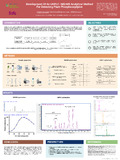
[en] A complete analytical workflow was established, including lipid extraction, silica-based solid-phase extraction (SPE) cleanup, chromatographic separation, and tandem mass spectrometry optimization. Sample preparation was optimized to reduce matrix effects, particularly through chlorophyll removal during the SPE cleanup step. UHPLC conditions were optimized to achieve efficient separation of lysophospholipids, phospholipids, and oxidized phospholipids within a 16-minute analysis. MS/MS parameters, including precursor and product ion selection, collision energy, fragmentor voltage, and ESI source conditions, were optimized using representative standards from the major phospholipid classes.
The optimized method enabled sensitive and selective detection of several putative phosphooxylipins in stressed A. thaliana, including candidate OPDA- and dnOPDA-containing phospholipid species. This analytical workflow provides a robust platform for future method validation and quantitative plant lipidomics. Future work will focus on optimizing the method using oxidized lipid standards, evaluating analytical performance (LOD, LOQ, linearity, accuracy, and precision), and extending its application to additional biotic stress conditions.