Abstract :
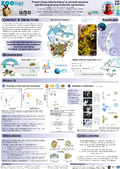
[en] Along the West Antarctic Peninsula (WAP), steep environmental gradients can be observed in response to climate change, resulting in longer ice-free period, warmer temperatures, and changes in primary production. Through the TANGO project (Brain BE, belspo), 5 sites were studied from the southern to the northern WAP. The sampling of basal food sources and consumers (8 phyla, 21 taxa and 5 trophic guilds), aimed to understand whether trophic interactions in benthic consumers are influenced by environmental differences and food sources availability. Fatty Acids (FA) content and Highly Branched Isoprenoids (HBI) were used as trophic biomarkers. For benthic consumers, a clear distinction was observed between filter feeders and grazers. Furthermore, within these trophic groups, differences were also observed depending on the feeding structures of the different species. The results suggested that some grazers had a more specific diet focused on microorganisms, while others had a more diversified diet. Moreover, these differences in feeding habits and function were also observed among filter feeders, depending on their ability to filter certain particle sizes. Also, HBI ratios suggested that sea-ice algae consumption varied depending on the site and species. Filter feeders showed no HBI signals related to sea-ice algae. Conversely, grazers showed locally HBI incorporation into their tissues, related to longer-lasting sea-ice cover. Biomarker analysis highlighted species dietary dependencies and trophic plasticity, which could reflect a functional response of the community to environmental gradients and potentially a factor of resilience to current and future climate change in WAP.