Mineral oil saturated hydrocarbons; Mineral oil aromatic hydrocarbons; Meat; LC/GC-FID; LC/GCxGC-FID/MS; Saponification
Abstract :
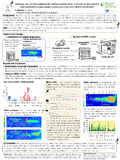
[en] Mineral oil saturated hydrocarbons (MOSH) and mineral oil aromatic hydrocarbons (MOAH) are a complex mixture of food contaminants with high lipophilicity [1]. Due to the complexity of MOH and food matrices, an efficient sample preparation method must be performed, which usually includes saponification, as it allows an enhancement of the analytical sensitivity due to the removal of lipids from the MOH extract. MOH are usually determined by LC-GC-FID, but the increasing demand for more detailed information on MOH composition is driving a shift to LC-GC×GC-FID/MS [2]. This complex system allows differentiation between subclasses of MOSH (e.g., linear and cyclic alkanes) and MOAH (e.g., 1-2 rings and ≥3 rings MOAH) that might show different toxicological risks. This study aimed to optimize a method for a detailed characterization of the MOSH and MOAH present in meat, as requested by the EFSA (e.g., evaluate whether animal food poses a risk due to MOSH accumulation or the occurrence of 1-2 rings and ≥3 rings MOAH in food)[1]. A microwave-assisted saponification and extraction (MASE) procedure was optimized and validated based on recently published works [3,4]. Unprocessed meat samples (n=30) were purchased from local supermarkets in Belgium and subjected to a MASE, followed by LC/GC×GC-FID/MS analysis. The information obtained by GC×GC and MS enabled a detailed investigation and differentiation of MOSH and MOAH subclasses, thus revealing some hints on the source of contamination.
[1] EFSA, J. EFSA 21 (2023) 1–143
[2] G. Bauwens, et al., ABC 415 (2023) 5067–5082
[3] G. Bauwens and G. Purcaro, Anal. Chim. Acta 1312 (2024) 34278 [4] P. Albendea, et al., Animals 14 (2024) 1450
Research Center/Unit :
Gembloux Agro Bio Tech
Disciplines :
Chemistry Food science
Author, co-author :
Albendea, Paula ; Université de Liège - ULiège > Département GxABT > Chemistry for Sustainable Food and Environmental Systems (CSFES)
Purcaro, Giorgia ; Université de Liège - ULiège > Département GxABT > Chemistry for Sustainable Food and Environmental Systems (CSFES)
Language :
English
Title :
Mineral oil hydrocarbons in unprocessed meat: A study of saturated and aromatic subclasses using an LC/GC×GC-FID/MS platform
Publication date :
June 2025
Event name :
3rd Advance in Separation Sciences workshop
Event place :
Gembloux, Belgium
Event date :
From 12 to 13 of June 2025
Audience :
International
Peer review/Selection committee :
Peer reviewed
Commentary :
Acknowledgement
The authors thank Milestone, LECO, and Restek for their support. This work is supported by ACESSS (Academic Center of Excellence for Separation Science and Sensing).