Abstract :
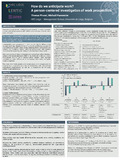
[en] Objectives: Research on work-related thinking has predominantly focused on present- and past-oriented perspectives, with limited attention to the future. To address this gap, the concept of work prospection was introduced, defined as conscious or spontaneous thoughts about future work, encompassing cognitive or affective dimensions (positive or negative) (Rutten et al., 2023). While previous studies have investigated work prospection within individuals using intensive longitudinal designs, its role in between-person designs, which highlight individual differences in anticipating future tasks and goals, remains unexplored. This study adopts a person-centered approach to examine work prospection as a trait, its relationships with personal and work characteristics, and employee well-being and performance. Methods: Longitudinal data were collected from Belgian employees (NWave 1 = 1,458). Confirmatory factor analyses assessed the discriminant and convergent validity of the measures. Latent profile analyses (LPA) were conducted to identify distinct subgroups of employees based on work prospection dimensions. The antecedents and outcomes of profile membership were then examined. Results: While data collection for Wave 2 is planned for January 2025, Wave 1 analyses revealed three distinct dimensions of work prospection with strong psychometric properties. These dimensions were related yet distinct from constructs such as dispositional optimism, trait anxiety, and workplace anxiety, supporting their convergent and discriminant validity. LPA revealed six employee profiles based on work prospection dimensions. Profiles characterized by high positive affective work prospection and low cognitive and negative work prospection were linked to higher work engagement, better job performance, and lower emotional exhaustion. Conclusions: These findings enhance our understanding of future-oriented, work-related thinking and provide evidence supporting the convergent and discriminant validity of work prospection as a trait-based construct. Distinct profiles significantly predict employee well-being, engagement, and performance, highlighting the importance of incorporating future-oriented perspectives into organizational psychology research. Full longitudinal results will be presented at the conference.