alternative splicing; RBP; TFIP11; Skipping Exons; Zebrafish; Microcephaly; Microphtalmia; Mitose
Abstract :
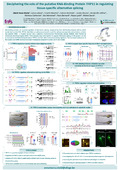
[en] RNA-binding proteins (RBPs) comprise a large class of proteins that regulate the metabolism of RNA transcripts throughout their life cycle. Many regulatory RBPs function in a cell-, tissue-, or condition-specific manner and are capable of regulating variety of molecular processes such as alternative splicing of messenger RNAs that is critical for appropriate protein expression in the corresponding tissues. Normal functions of RBPs are vital for human physiology, as defects in RBP function have been associated with many diseases such as neurodegeneration, autoimmune diseases, and cancers.
RNA-binding domains (RBDs) in RBPs are the functional units responsible for RNA binding. Multiple RBDs are often present in a single RBP and these modular domains can coordinate and enhance binding to RNA in a sequence and/or structure-specific manner. Intrinsically disordered regions (IDRs) often behave as linkers connecting RBD within a single RBP but these regions also have the ability to mediate interactions with RNA directly.
Tuftelin Interacting Protein 11 (TFIP11) is a spliceosome protein which possesses two putative RBDs, a G-patch domain at its N-terminal region and a dsRBD at the C-terminal extremity. Both RBDs are surrounded by IDRs. Despite we previously demonstrated important regulatory roles for TFIP11 in regulating spliceosome assembly and activation, little is known about the functionality of its putative RNA-binding modules including RBDs and IDRs, nor about the molecular mechanisms governing its role in regulating tissue-specific alternative splicing.
In the present study, we have further addressed these two fundamental questions and provide an unprecedented classification of TFIP11 as a new RNA binding protein.
Disciplines :
Biochemistry, biophysics & molecular biology
Author, co-author :
Obeid, Anna Maria ; Université de Liège - ULiège > Département des sciences biomédicales et précliniques
Genco, Alexia ; Université de Liège - ULiège > Département des sciences biomédicales et précliniques
Uriarte, Maxime ; Université de Liège - ULiège > Département des sciences biomédicales et précliniques
Galvan Bartimée; Division of Pediatric Oncology, University Children’s Hospital Zurich, Switzerland
Juniku Blinera; Laboratory of Physical Chemistry of Biomolecules, UCPTS, University of Namur, Belgium