banana; Fusarium oxysporum f.sp cubense; panama disease; biocontrol; microbiota; microbiome
Abstract :
[en] Panama disease (or Fusarium wilt), caused by the soil-borne fungus Fusarium oxysporum f. sp. cubense (Foc), has a long history of damaging banana production. Around 1962, the Cavendish cultivar was found to resist the existing strains of Fusarium wilt and replaced Gros Michel in the export market (Ploetz, 2015). However, a new strain, Foc Tropical Race 4 (Foc TR4), has emerged as a significant threat to Cavendish bananas in tropical regions(Ghag et al., 2015).
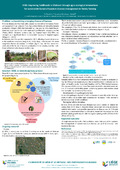
In Vietnam, Foc TR4 was first reported in 2017, affecting Cavendish bananas in the northern provinces (Hung et al., 2018). Now, it has become the most dangerous disease on banana in Vietnam (figure 1.a). This has raised concerns about the future of banana production in the country and the livelihoods of farmers who depend on this crop.
Research Center/Unit :
TERRA Research Centre. Gestion durable des bio-agresseurs - ULiège
Disciplines :
Agriculture & agronomy
Author, co-author :
Vu Thi Thao Mi ✱; Université de Liège - ULiège > TERRA Research Centre
Massart, Sébastien ✱; Université de Liège - ULiège > TERRA Research Centre > Gestion durable des bio-agresseurs
Dang Toan, Vu; Vietnam Academy of Agriculture Science > Plant Resource Center
✱ These authors have contributed equally to this work.
Language :
English
Title :
ViAE: Improving livelihoods in Vietnam through agro-ecological innovations for sustainable banana Fusarium disease management in family farming
Publication date :
29 November 2024
Event name :
The University of Liège and Vietnam: lasting partnerships
Event organizer :
The University of Liège
Event place :
Liège, Belgium
Event date :
Nov 29, 2024
Audience :
International
Funders :
ARES - Académie de Recherche et d'Enseignement Supérieur