[en] Background:
Heart-type fatty acid-binding protein (H-FABP) is a low molecular weight protein involved in the intracellular uptake and buffering of long chain fatty in the myocardium. It is an early marker for acute coronary syndrome. Troponin T (TnT) is a component of the contractile apparatus of the striated musculature. Cardiac TnT is a cardio-specific, highly sensitive marker for myocardial damage. The aim of our study was to compare the results obtained with the H-FABP and the highly sensitive cardiac troponins (hsTnT) and to test their cardiospecificity in healthy runners.
Methods:
Twenty three runners (marathon) were enrolled. We drowned samples at three times: just before (T0), just after (T1), and three hours after the end of the race (T3). H-FABP was determined with a Randox immunoturbidimetric assay and hs-TnT with a Roche electrochemiluminescence immunoassay, both on Cobas 6000. A linear regression was calculated to observe if there is any correlation between the two biomarkers. Values above the 95th percentile for H-FABP (2.5ng/mL) and the 99th percentile for hsTnT (14ng/L) were considered as positive.
Results:
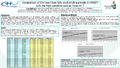
At T0, none of the subjects were positive for hsTnT but 35% were positive for H-FABP; at T1, 83% for hsTnT and 100% for H-FABP; at T3, 83% for hsTnT and 96% for H-FABP. At T0, the regression equation was H-FABP T0 = 3.9454 – 0.1001 x hsTnT T0; at T1: H-FABP T1 = 51.838 – 1.7026 x hsTnT T1; at T3: H-FABP T3 = 47.977 – 1.6193 x hsTnT T3. No correlation was observed between the two biomarkers at the different time.
Conclusions:
We observed a significant increase of H-FABP and hsTnT in runners. These markers are independent to each other. These values could biologically correspond to a heart ischemia. However, we suggested that exercise-induced cardiac hsTnT and H-FABP release is not a marker of exercise-induced pathology but likely a physiologic response to effort or an exercise-induced cardiac remodelling.
Disciplines :
Orthopedics, rehabilitation & sports medicine Laboratory medicine & medical technology
Author, co-author :
LE GOFF, Caroline ; Centre Hospitalier Universitaire de Liège - CHU > Chimie médicale
MELON, Pierre ; Centre Hospitalier Universitaire de Liège - CHU > Cardiologie
BREVERS, Eric ; Centre Hospitalier Universitaire de Liège - CHU > Chimie médicale
Fillet, Marianne ; Université de Liège - ULiège > Département de pharmacie > Analyse des médicaments
Kaux, Jean-François ; Université de Liège - ULiège > Département des sciences de la motricité > Département des sciences de la motricité
Chapelle, Jean-Paul ; Université de Liège - ULiège > Département de pharmacie > Département de pharmacie
Cavalier, Etienne ; Université de Liège - ULiège > Département de pharmacie > Chimie médicale
Language :
English
Title :
Comparison of the Heart-type fatty acid-binding protein (H-FABP) with the high sensitive cardiac troponin T in healthy runners
Publication date :
June 2013
Event name :
18th Annual Congress of the ECSS
Event organizer :
ECSS
Event place :
Barcelona, Spain
Event date :
26th-29th june 2013
Audience :
International
Main work title :
Book of abstracts of 18th Annual Congress of the ECSS