Abstract :
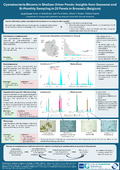
[en] Small, shallow urban lakes provide important ecosystem services, such as biodiversity support and recreational opportunities, which are closely linked to phytoplankton biomass and community composition. In several Brussels ponds (Belgium), potentially harmful cyanobacteria blooms (cHABs) are recurrently observed. This study aims to describe and compare cyanobacteria dynamics across twenty urban ponds, addressing the challenge of identifying appropriate methodological strategies to efficiently capture changes in phytoplankton assemblages. We combined a single year of seasonal sampling across all twenty ponds with more than two years of (bi)monthly sampling in a subset of four ponds. Phytoplankton dynamics were assessed using multiple complementary approaches: chlorophyll a measurement as a proxy for total phytoplankton biomass, chemotaxonomic pigment analysis to estimate major phytoplankton groups, microscopy for cross validation of cyanobacteria identification, and 16S ribosomal DNA (rDNA) sequencing with cyanobacteria-specific primers. Seasonal sampling was useful for identifying ponds with low biomass and low risk of cHABs, but proved insufficient to capture cyanobacteria dynamics. Chlorophyll a concentration alone did not reliably indicate cyanobacteria biomass, as high values frequently reflected blooms of other phytoplankton groups, particularly cryptophytes and chlorophytes. Chemotaxonomic analysis efficiently captured cyanobacteria evolution, revealing elevated biomass especially during summer, but lacked fine-scale taxonomic resolution. Microscopy offered direct and timely identification but was constrained by its labor intensive and operator dependent nature. In contrast, 16S rDNA sequencing provided finer taxonomic resolution, including the detection of picocyanobacteria not visible under standard microscopy, yet remains inadequate for routing monitoring. Results showed that cHABs were mainly dominated by the genera Dolichospermum, Microcystis, and Aphanizomenon, all associated with potentially toxic strains. Overall, our findings highlight the need for combining multiple monitoring approaches to assess cyanobacteria dynamics in urban ponds.