Abstract :
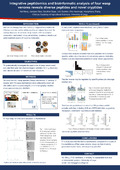
[en] Introduction: Bee venom therapy has been officially integrated into traditional Chinese medicine and is widely used as an adjunct treatment for various diseases. In contrast, wasp venom, with its complex composition and potent biological activities, remains a valuable yet underexplored source of bioactive molecules. Objectives: To systematically investigate the peptidome of wasp venoms and evaluate their potential pharmacological activities for drug discovery and rational utilization of venom-derived resources. Methods: Venoms from four wasp species (Vespa mandarinia, V. velutina, V. basalis, and Provespa barthelemyi) were collected by electrical stimulation and analyzed using liquid chromatography–tandem mass spectrometry (LC–MS/MS). Results and expectation: A total of 681 peptides were identified, nearly 90% of which represent novel sequences. Comparative analysis revealed that most peptides were species-specific, while only a few were shared among species, indicating marked species-dependent patterns in wasp venom peptidomes. Further analysis suggested that peptide release may be regulated by specific proteolytic cleavage mechanisms, contributing to structural and functional diversity. Bioinformatic predictions indicated that 291 peptides exhibit potential pharmacological activities, including angiotensin-converting enzyme (ACE) and dipeptidyl peptidase IV (DPP4) inhibition, suggesting therapeutic potential in hypertension and diabetes. In addition, ten novel cryptides were identified, highlighting new opportunities for venom-derived drug discovery. Overall, this study provides the first comprehensive comparative analysis of the peptidomes of four wasp venoms, revealing their diversity, generation mechanisms, and bioactivity potential.