Abstract :
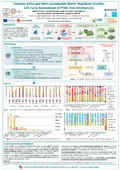
[en] The Belgian project PFAS-FREE aims to develop safe and sustainable water-repellent textile solutions as alternatives to per- and polyfluoroalkyl substances (PFAS), offering superior performance compared to currently available fluorine-free products. Durable water repellency is essential for a wide range of applications, from outdoor clothing and food packaging to construction membranes, yet conventional coatings rely on PFAS-based formulations. PFAS use in textiles poses significant environmental and health concerns, due to their persistence, bioaccumulation and toxicity, and their phase-out is a regulatory priority in Europe. The PFAS-FREE project combines bio-based hydrophobic polymer coatings with micro- and nanostructuring of textile surfaces to achieve durable water repellency without relying on harmful substances.
To prevent “regrettable substitution”, the project applies a Safe and Sustainable by Design (SSbD) approach, integrating early-stage safety and environmental assessments of the developed products and processes. Within this framework, a comparative Life Cycle Assessment (LCA) evaluates the environmental performance of fluorine-free textiles relative to a PFAS-based reference, from cradle to grave. The analysis follows ISO 14040/44 standards and applies the Environmental Footprint 3.1 method, covering sixteen impact categories including climate change, resource use, and toxicity. The results also support eco-design by identifying environmental hotspots and guiding material and process optimization.
Preliminary findings suggest that PFAS-free alternatives may substantially reduce impacts related to climate change, toxicity, resource use, and ozone depletion, primarily due to the avoidance of PFAS, the use of renewable materials, and improved recyclability. From a circularity perspective, the use of bio-based polymers partially replaces fossil feedstocks, while the absence of halogens simplifies end-of-life management and enables future recycling of treated textiles, thereby reducing waste, raw material use, and CO₂ emissions.
Overall, this work illustrates how LCA-guided eco-design within an SSbD framework can support the transition toward safer and more sustainable textiles, contributing to the EU’s ambitions for circularity, decarbonization, and chemical safety.
Funding text :
Belgium Builds Back Circular (BBBC) national initiative, funded by the European fund, NextGenerationEU, and Managed by the Belgian FPS Economy