Abstract :
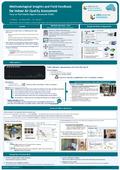
[en] Indoor Air Quality (IAQ) is strongly influenced by emissions from building materials, which are major sources of volatile organic compounds (VOCs) in indoor environments. These emissions are commonly characterised under controlled conditions using emission test chambers, according standards such as ISO 16000-9 [1]. These methods enable determination of emission rates and compound-specific profiles, supporting material labelling and CE marking under the Construction Products Regulation (EU) No 305/2011 [2].
While chamber methods provide reproducible data, their representativeness under real conditions is limited by environmental variability, material ageing, and ventilation complexity. In situ IAQ assessment relies on reference methods from the ISO 16000 series, based on sampling and laboratory analysis. These allow accurate VOC quantification and comparison with guideline values [3] but remain time-integrated, limiting detection of short-term peaks and dynamic exposure events. To address this, sensor-based systems are increasingly used for continuous monitoring. Miniaturised sensors measuring total VOC (TVOC) provide high temporal resolution and capture emission dynamics linked to temperature, humidity, occupancy, and ventilation. However, TVOC is an indicative parameter rather than a true sum of VOC’s. It is derived using calibration factors, (e.g. isobutylene for PID, ethanol for MOS sensors), which introduces biases depending on mixture composition. Sensor performance is also affected by drift, cross-sensitivity, and limited selectivity, reducing quantitative reliability compared to reference methods.
This study combines laboratory and field investigations of IAQ in environments. Results highlight the complementary of approaches: reference methods ensure chemical specificity and regulatory compliance, while sensors capture temporal variability and emission dynamics.
Odour-related indicators were also considered to better assess perceived air quality. Compounds at low concentrations can significantly affect perception due to low odour thresholds, particularly aldehydes. It highlights the importance of sensory relevance in IAQ assessment [4-6].
Future work should focus on harmonising sensor evaluation protocols, improving calibration strategies, and further integrating sensory metrics into IAQ assessment methodologies.
Disciplines :
Physical, chemical, mathematical & earth Sciences: Multidisciplinary, general & others