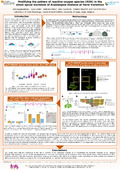
[en] Aerial organs of plants arise from their shoot apical meristem (SAM), which consists of undifferentiated cells organized in two zones: the central zone contains slowly proliferating stem cells whose daughter cells are pushed away toward the peripheral zone, in which faster cell division and organ initiation occur. The homeostasis of the SAM is finely controlled by an interplay between several genes and hormones. Additionally, previous studies suggest that reactive oxygen species (ROS) such as the superoxide anion (O2.-) and hydrogen peroxide (H2O2) are important for the fate of the meristematic cells, with O2.- being involved in stem cell maintenance in the central zone and H2O2 promoting differentiation in the peripheral zone. How this “ROS landscape” interferes with the changes in gene expression that occur in the SAM at the transition to flowering remains unknown. Our approach to address this question consists in expressing enzymes involved in O2.- and H2O2 metabolism [RESPIRATORY BURST OXIDASE HOMOLOG F (RBOHF), COPPER/ZINC SUPEROXIDE DISMUTASE 1 (SOD1), FE SUPEROXIDE DISMUTASE 2 (FSD2) and CATALASE 2 (CAT2)] in specific zones of the SAM during the floral transition to modify ROS distribution. The coding sequences of these enzymes were therefore fused to the promoter of FD, LEAFY (LFY), APETALA 1 (AP1), FRUITFULL (FUL) and TERMINAL FLOWER 1 (TFL1) genes. Transgenic A. thaliana plants have been generated and cultivated in a synchronised flowering induction system in order to activate the transgenes by a photoperiodic shift. In situ hybridization and RT-qPCR targeting the ectopically expressed enzymes allowed us to confirm the functionality of the constructs. Ongoing phenotyping of the plants is presented.