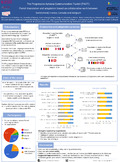
Translating and adapting the Progressive Aphasia Communication Toolkit (PACT) for Francophone contexts: A collaborative and international effort across Switzerland, France, Belgium, and Canada - 2026
Unpublished conference/Abstract (Scientific congresses and symposiums)
Translating and adapting the Progressive Aphasia Communication Toolkit (PACT) for Francophone contexts: A collaborative and international effort across Switzerland, France, Belgium, and Canada
[en] ntroduction
Primary progressive aphasia (PPA) is a neurodegenerative syndrome characterized by progressive language and/or speech impairments that significantly affect communication for both patients and their communication partners1. Speech and language therapists (SLTs) play a central role in assessment and intervention. However, the assessment process itself is often experienced by patients as demanding, exhausting, and emotionally confronting. The Progressive Aphasia Communication Toolkit (PACT) was developed within the R.A.I.S.E. framework2 to support strengths-based, person-centered assessment and intervention in PPA. While its clinical utility has been demonstrated in English, linguistic and cultural adaptation is essential to ensure relevance and accessibility for French-speaking clinicians and patients across diverse francophone contexts.
Aims
This study aims to:
Translate and culturally adapt the PACT into French while ensuring conceptual equivalence across diverse francophone contexts;
Evaluate the clinical acceptability of the French version among SLTs, focusing on clarity, usability, and relevance;
Explore clinicians’ perceptions of the content validity of the adapted tool for routine clinical practice with individuals with PPA.
Methods
An international consortium of researchers and clinicians from Switzerland, France, Belgium, and Canada conducted the translation and adaptation following International Test Commission (ITC) guidelines3, with minor methodological adaptations. The process included AI-assisted forward translation as an initial support, independent expert review, pairwise reconciliation across countries, anonymized synthesis, independent consensus review by a third expert pair and reconciliation of both anonymized versions, team validation meetings, selective back-translation and targeted cultural as well as content adaptations.
The resulting French version will be pilot-tested with French-speaking SLTs and with people with PPA (PwPPA) and their communication partners. Feedback will be collected through structured questionnaires. Quantitative ratings of clarity, cultural appropriateness, and clinical utility will be summarized descriptively, while qualitative feedback will be analyzed using thematic analysis.
Results
The translation process did not highlight major linguistic or clinical variations within the Francophone world, especially regarding professional terminology. Nevertheless, even after consensus has been reached among SLTs, the need for a shared glossary emerged, particularly to support other professionals who may use the tool but are not familiar with specific linguistic terminology.
Clinicians working with PwPPA will be invited to evaluate the French PACT in terms of clarity, feasibility, cultural relevance, and clinical usefulness. Qualitative feedback will be used to examine the perceived value of the toolkit for psychoeducation, communication partner training, and individualized intervention planning. Pilot implementation with PwPPA and their communication partners will explore acceptability and perceived impact. Feedback from this pilot phase will inform potential minor refinements of the tool.
Discussion
The French adaptation of the PACT demonstrates the feasibility and added value of early and structured cross-national collaboration for developing linguistically and culturally inclusive and clinically relevant tools. The study underscores the importance of involving multiple Francophone regions throughout the adaptation process and highlights how collaborative methodologies strengthen both methodological rigor and clinical utility, ultimately supporting more person-centered and meaningful assessment practices in PPA.
Disciplines :
Neurology
Author, co-author :
Hausmann, Alessa; Département de psychologie, Université de Genève, Geneva, Switzerland
Basaglia-Pappas, Sandrine; Département de psychologie cognitive et de neuropsychologie, Université de Mons, Mons, BelgiumDépar
Castéra, Marion; EMC Laboratory (EA 3082), Université Lyon 2, Université de Lyon, Bron, France > CHU de Saint-Étienne, Hôpital Nord, Saint-Priest-en-Jarez, France
Duboisdindien, Guillaume ; Université de Liège - ULiège > Département de Psychologie > Neuropsychologie de l'adulte ; Unité de Formation et de Recherche en Sciences de la santé, Département des sciences de la réadaptation, Université Marie et Louis Pasteur, INSERM, UMR 1322 LINC, Besançon, France
Lavoie, Monica; Faculté de Médecine, École des sciences de la réadaptation, Programme d’orthophonie / Université Laval, CIRRIS, Québec (QC, Canada)
Renard, Antoine ; Université de Liège - ULiège > Psychologie et Neuroscience Cognitives (PsyNCog)
Language :
English
Title :
Translating and adapting the Progressive Aphasia Communication Toolkit (PACT) for Francophone contexts: A collaborative and international effort across Switzerland, France, Belgium, and Canada
Publication date :
18 July 2026
Event name :
ICPPA 2026 : The first International Conference on Primary Progressive Aphasia - London (UK)