Abstract :
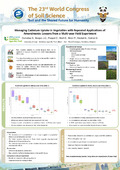
[en] Food safety has become a major concern in Belgium due to excessive cadmium (Cd) levels in vegetables grown in private and market gardens, even in areas with low soil contamination (< 1 to 5 mg·kg⁻¹ Cd). Past industrial activities in central Belgium, particularly in the Meuse-Vesdre valleys, caused significant atmospheric depositions that continue to affect food production today. Although the role of soil pH in controlling Cd mobility and plant uptake is well established, achieving neutral or slightly alkaline pH appears insufficient to ensure compliance with European food safety standards under these low-level contamination scenarios. A three-year field experiment (2023-2025) was conducted in two market gardens in the Province of Liège, with pseudo-total soil Cd levels of 1–2.5 mg·kg⁻¹ and initial pH of approximately 5.5. Using a randomized complete block design with three to five replicates, four treatments were established: control, lime application (marine-derived CaCO₃), biochar amendment and green waste compost amendment. Swiss chard and lettuce were cultivated over several seasons. Soil samples were collected seasonally to measure soil pH and CaCl₂-extractable metal concentrations, while edible tissues were analyzed for total metal content. Compost application significantly increased soil pH compared to control, sometimes exceeding lime addition, and substantially reduced CaCl₂-extractable Cd. Lime also increased pH effectively, while biochar demonstrated more moderate effects. However, no significant amendment effects were observed during the first year, suggesting that repeated applications are necessary before measurable impacts on Cd bioavailability emerge. Strong seasonal variability in soil pH and CaCl₂-extractable Cd levels was observed across years, independent of the effects of amendments. This highlights the influence of environmental factors (temperature, moisture, etc.) on plant biomass production and metal mobility. Despite substantial increases in soil pH (often exceeding 6.0) and reductions in extractable Cd in amended plots, analyses of vegetables suggest that achieving compliance with the EU limits remains challenging. Both Swiss chard and lettuce frequently exceeded regulatory thresholds. These results highlight the limitations of conventional pH-based remediation strategies in low-contamination contexts. Geochemical modeling is essential for elucidating Cd speciation in soil solution and identifying additional immobilization mechanisms beyond the effects of pH. Long-term, integrated approaches combining predictive modeling and temporal monitoring of multiple geochemical processes are necessary to ensure vegetable safety and develop effective, site-specific remediation strategies in low-contamination agricultural contexts.