Abstract :
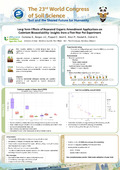
[en] Understanding the long-term effectiveness of amendments and the mechanisms of metal immobilization is essential for managing cadmium (Cd) contamination in agricultural soils. Although short-term studies (1-2 years) dominate the literature, the cumulative effects of repeated organic amendment applications are poorly documented. Past industrial activities in Belgium have led to widespread low-level soil contamination (< 1 to 5 mg·kg⁻¹ Cd), raising concerns about food safety as excessive Cd levels have been found in vegetables from private and market gardens. A five-year pot experiment (2020-2025) was conducted using soil from a contaminated market garden in the Province of Liège, Belgium (pseudo-total Cd: 1.5 mg·kg⁻¹, initial pH CaCl₂: 5.6). The pots (5L capacity, five replicates) initially received control, biochar and green waste compost treatments. In 2021, lime was added as a fourth treatment. The amendments were reapplied each spring and Swiss chard was cultivated outdoors annually, with systematic monitoring of soil pH and CaCl₂-extractable metals. Green waste compost showed the most significant and persistent increase in pH. A marked pH rise and a sharp decline in CaCl₂-extractable Cd occurred after the second compost application. Subsequent annual applications primarily maintained and stabilized these effects. Biochar induced more gradual changes in pH and Cd. No significant effects were observed during the first year across all amendments. Lime addition also increased soil pH, though to a lesser extent than compost. Significant interactions were identified between lime and the other amendments, which complicates the interpretation of the overall effects of the treatments. Compost reduced Cd bioavailability beyond the effect of pH alone, likely through the enrichment of soil organic matter and increased cation exchange capacity. After five years, most compost-amended plants fell below the European food safety standards, showing that plant Cd responds slowly and requires long-term amendment applications. Unlike field conditions, pots exhibited stable, monotonic trends with minimal seasonal fluctuations in pH or CaCl₂-extractable Cd. This stability reflects the controlled irrigation regime and the limited, enclosed root environment. Furthermore, plants grown in pots produced significantly lower biomass than field-grown crops, highlighting the necessity of field experiments to validate these observations under realistic agronomic conditions. Even in pots with very low CaCl₂-extractable Cd and near-neutral soil pH, vegetable Cd concentrations occasionally exceeded European limits, demonstrating that low soluble Cd alone does not guarantee food safety. This five-year study shows that repeated applications of organic amendments progressively reduce Cd bioavailability, with green waste compost yielding the strongest results. However, achieving stable improvements in soil pH and Cd immobilization requires 2 to 3 years of repeated applications.