Metabolic engineering; Bacillus; Biotechnology; Lipopeptides; Model based Prediction
Abstract :
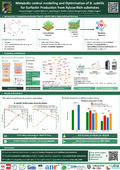
[en] Lipopeptides produced by Bacillus subtilis have emerged as sustainable alternatives to their synthetic counterparts, offering superior biodegradability and reduced environmental impact. However, the high cost of substrates continues to pose a major challenge to their commercial viability. To address this issue, genome optimization of the production strain is essential for developing efficient microbial factories able to grow on cheap agro-resources. Nevertheless, the vast design space can hinder the timely identification of optimal genetic modifications. This study aims to model B. subtilis metabolism and its regulation, with the goal of computing suitable genetic modification to engineering a lipopeptide overproducing strain capable of utilizing cost-effective xylose-rich renewable substrates.
B. subtilis metabolic pathways were modeled using Partial Reaction Networks (PRNs). Knock-Out and Knock-Up predictions on PRNs were conducted based on constraint solving and abstract interpretation. BioComputing’s reaction network prediction tool was used to for this purpose. CRISPR-Cas9 was used to edit the genome. The resulting mutant strains were cultivated in shake flasks to evaluate the accuracy of in-silico predictions.
Pentose Phosphate pathway was formally modeled as a PRN. This model made possible the prediction of araE overexpression as suitable target for enhancing xylose conversion into G3P. Overexpression of araE combined with the Knock-Up of ilvBH operon from BCAA PRN was experimentally validated by assessing the mutant strain growth and surfactin production. B. subtilis mutants demonstrated increased production of surfactin in accordance with the bioinformatic predictions. These findings show that formal reasoning can guide and provide explanation in support of B. subtilis metabolic engineering.