Abstract :
[en] Introduction
Despite the proven beneficial health effects of fruit consumption, around 30% of food waste in the Greater Region (France, Belgium, Germany and Luxembourg) corresponds to fruits, while fruit intake remains below dietary guidelines recommendations (EUROSTAT, 2025; Sciensano, 2023).
Locally produced fruits (apples, pears, grapes, mirabelle plums, and strawberries) are important sources of micronutrients and bioactive compounds (WHO, 2026). Furthermore, whole fruits provide substrates that reach the colon, where the gut microbiota transforms them into bioactive compounds that may benefit the host, such as short-chain fatty acids produced from dietary fiber fermentation and polyphenol metabolites (Armet et al., 2022). However, studying whole fruits' effects on microbiota-driven responses presents methodological challenges, as compounds normally absorbed in the small intestine must be removed to accurately simulate colonic exposure.
Objectives
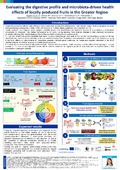
As part of the GReen Logistik project, this study aims to assess how locally produced fruits influence microbiota-driven health outcomes. For this, in vitro digestion models will be used to determine the digestive profile of local fruits and the transformation of fruit components by the gut microbiota.
Methods
The INFOGEST protocol is a widely accepted international consensus method for simulating upper gastrointestinal digestion (Brodkorb et al., 2019; Minekus et al., 2014). This study proposes to use INFOGEST-based in vitro digestion protocol for local fruits, adapting enzyme concentrations and post-digestion handling to improve physiological relevance prior to inoculation in in vitro fermentation models. Absorbable and non-absorbable compounds from fruits will be separated and analyzed to assess changes in sugar availability and antioxidant activity during in vitro digestion.
Results and Conclusions
This work is currently in progress. Preliminary efforts focus on adjusting enzyme concentrations and treatment of the samples during stomachal and ileal digestion.
This approach is expected to enhance our understanding of how locally produced fruits influence microbiota-driven health effects, supporting evidence-based strategies to promote fruit consumption and improve the nutritional regional environment.