Keywords :
Cliff ecology, Microclimate, Biodiversity, Ecological scaling, Disturbance Ecology, Rock climbing
Abstract :
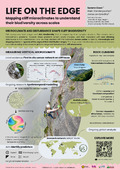
[en] Vertical rock cliffs are structurally complex ecosystems with variation in slope, aspect, height, and surface roughness, creating a mosaic of microclimates. This heterogeneity supports high biodiversity. Cliff microhabitats may act as cool refugia buffering species from warming and drought, or as warm stepping stones facilitating climate-driven range shifts. At the same time, anthropogenic pressure on these historically inaccessible ecosystems is increasing due to the growing popularity of recreational rock climbing. Despite their ecological importance, the combined effects of microclimate and climbing disturbance on cliff biodiversity remain poorly understood.
A local case study at Freyr (Belgium) assessed climbing impacts on cliff vegetation using the standardised MIREN Rocks protocol. Vegetation patterns were mainly shaped by abiotic factors, with species richness peaking at intermediate climbing disturbance, likely due to reduced competitive exclusion. In contrast, climbed cliffs showed a loss of unique stress-tolerant and locally red-listed species. Ongoing multisite analyses within the Meuse Valley and across the global MIREN Rocks network will allow identification of general patterns in cliff vegetation.
In addition, one of the first in-situ microclimatic measurements on vertical cliffs was conducted at Freyr using thermologgers installed directly on cliff faces. South-facing cliffs were generally warmer than north-facing ones, although the magnitude of this difference varied seasonally. Expanding sensor networks combined with UAV-based thermal imaging and high-resolution 3D photogrammetry will enable spatiotemporal microclimate modelling of cliffs.
Linking these detailed microhabitat maps with ecological data at local and global scales will improve understanding of species persistence under climate change and human disturbance, and support evidence-based guidelines for balancing outdoor recreation with biodiversity conservation in cliff ecosystems.