Abstract :
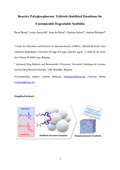
[en] The development of tissue engineering scaffolds requires precise control over structural and mechanical properties, cell-material interactions, and predictable biodegradability. Our work introduces a novel approach to develop degradable polyphosphoester-based scaffolds through high internal phase emulsion (HIPE) templating, which enables fine tuning of relevant scaffolds features for regenerative medicine. This strategy involves the design of reactive amphiphilic end-methacrylated polyphosphoester (PPE) triblock copolymers which serve both as emulsion stabilizers and reactive precursors for fabricating degradable PPE scaffolds. Compared to traditional surfactants, such reactive stabilizers anchor chemically during crosslinking, with the potential to influence the bulk properties, surface characteristics, and morphology of the scaffolds. A series of polyHIPEs incorporating various amounts of triblock, including materials entirely made of reactive PPE triblocks, were produced. Open-cell porous structures, favorable to cell colonization, were achieved and tailored by adjusting the triblock content. Modulation of the PPE triblock level also allowed control of the mechanical properties of the scaffolds, covering a range of moduli suitable for soft tissues, and slowed degradation within application-relevant timeframes for tissue engineering while preserving full degradability of the scaffolds. In vitro studies confirmed that the scaffolds are non-cytotoxic and support viable cells over time. Overall, reactive PPE triblocks represent a powerful platform to tailor the structure, mechanical properties, kinetic degradability of scaffolds according to the specific application needs for tissue regeneration.
Scopus citations®
without self-citations
0