Hypereosinophilia; chronic eosinophilic leukemia; myeloid/lymphoid neoplasm with eosinophilia and tyrosine kinase fusion; PDGFRB; TPM3::PDGFRB; myelodysplastic/myeloproliferative neoplas
Abstract :
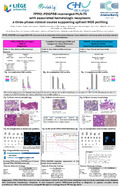
[en] Objectives: To illustrate a cytogenetically driven diagnostic workflow for PDGFRB-rearranged
myeloid/lymphoid neoplasms with eosinophilia (MLN-TK), and to explore the concordance and routine applicability of complementary transcriptomic approaches for the characterization of rare PDGFRB fusion partners.
Methods: A 77-year-old male presented with marked hypereosinophilia (~3.0×10Ͽ/L). Bone marrow morphology supported chronic eosinophilic leukemia without blast excess. Conventional cytogenetics revealed a t(1;5)(q21;q33) involving the 5q33 region, prompting PDGFRB break-apart FISH, which confirmed rearrangement in approximately 70% of nuclei. Fusion partner identification and breakpoint characterization were established using transcriptomic analysis and targeted DNA sequencing at diagnosis. Whole-transcriptome RNA sequencing and optical genome mapping were initiated to assess cross-platform concordance and to further refine structural characterization.
Results: A TPM3::PDGFRB fusion was identified, with breakpoints involving TPM3 and PDGFRB exons consistent with previously reported rearrangements. The cytogenetic and molecular findings enabled prompt initiation of targeted therapy. Treatment with low-dose imatinib (100 mg/day) resulted in rapid hematologic improvement and complete hematologic and cytogenetic remission, with normalization of PDGFRB FISH within five months. Ongoing analyses aim to evaluate concordance between transcriptomic methodologies and to assess their respective contributions to fusion detection and routine diagnostic implementation.
Conclusions: This case highlights the central role of cytogenetics as an entry point for PDGFRB- rearranged MLN-TK and confirms the reliability of transcriptomic and DNA-based approaches for definitive fusion partner identification. Evaluating concordance between complementary RNA-based methods is critical to define scalable, partner-agnostic strategies suitable for routine diagnostics and long-term disease monitoring.
Research Center/Unit :
Service de Génétique Humaine
Disciplines :
Hematology
Author, co-author :
Lambert, Frédéric ; Université de Liège - ULiège > Département des sciences biomédicales et précliniques ; Centre Hospitalier Universitaire de Liège - CHU > > Service de génétique ; Université de Liège - ULiège > Faculté de Médecine > Form. doct. sc. méd. (paysage) ; Université de Liège - ULiège > Faculté de Médecine > Doct. scienc. médi. ; Université de Liège - ULiège > Département des sciences précliniques BP > GIGA-R : Génétique humaine
KOOPMANSCH, Benjamin ; Centre Hospitalier Universitaire de Liège - CHU > > Service de génétique
DARDENNE, Elisa ; Centre Hospitalier Universitaire de Liège - CHU > > Service de génétique
CARPEAUX, Rudy ; Centre Hospitalier Universitaire de Liège - CHU > > Service de génétique
Keutgens, Aurore ; Université de Liège - ULiège > Département des sciences cliniques ; Centre Hospitalier Universitaire de Liège - CHU > > Service d'hématologie biologique et immuno-hématologie
Collins, Patrick ; Université de Liège - ULiège > Département des sciences biomédicales et précliniques ; Centre Hospitalier Universitaire de Liège - CHU > > Service d'anatomie et cytologie pathologiques
MENTEN, Catherine ; Centre Hospitalier Universitaire de Liège - CHU > > Service de génétique
VERTENOEIL, Gaëlle ; Centre Hospitalier Universitaire de Liège - CHU > > Service d'hématologie clinique
Language :
English
Title :
TPM3::PDGFRB-rearranged MLN-TK with associated hematologic neoplasm: a three-phase clinical course supporting upfront NGS profiling
Alternative titles :
[fr] Néoplasie Myéloïde associée à une fusion TPM3::PDGFRB: une histoire clinqiue en trois phases
Publication date :
23 April 2026
Number of pages :
1
Event name :
11th TRANSLATIONAL RESEARCH CONFERENCE MYELOPROLIFERATIVE NEOPLASMS