Keywords :
NIPBL, cohesin, Cornelia de Lange Syndrome, interneurons, brain, development
Abstract :
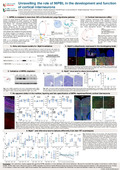
[en] Cornelia de Lange Syndrome (CdLS) is a congenital disorder affecting approximately 1 in 50,000 births in Europe, characterized by growth delay and developmental abnormalities that affect notably the cardiac, auditory,[MB2.1][LC2.2] and nervous systems. Neurological impairments involve intellectual disability, stereotypies such as self-injurious behavior, anxiety, and hyperactivity. The genetic etiology of the disease is heterogeneous and linked with syndrome severity. Among known causative genes, NIPBL mutations are identified in more than 50% of cases, and truncating mutations are associated with the most severe forms of CdLS. NIPBL is a ubiquitous and evolutionarily conserved protein which promotes cohesin activity. Cohesin is an ATP-dependent complex that fulfils a topological chromatin organizer role. On the one hand, it tethers the two sister chromatids in mitotic cells, from S phase to anaphase, to facilitate DNA replication, DNA damage repair, and the correct segregation of the chromatids. On the other hand, it shapes the genome into 3D structures, such as loops and TADs (Topologically Associated Domains), to ensure long-range gene regulation and proper phenotypic gene expression. Over the last decade, there has been increasing evidence of transcriptional deregulation in CdLS cells, which appears to result from a defect in chromatin loop extrusion. However, the pathological mechanism behind the onset of behavioral manifestations remains understudied. Cortical interneurons comprise different classes of GABAergic neurons, among which PV and SST interneurons, the two major cortical subtypes, have been linked to neurological disorders, such as schizophrenia and autism spectrum disorders. This study aims to decipher the contribution of NIPBL haploinsufficiency in cortical interneurons to the behavioral manifestations associated with CdLS using two complementary mouse models: a constitutive heterozygous Nipbl mutant to recapitulate the global features of CdLS, and a conditional Nipbl mutated model, enabling cell-type–specific analysis of the developmental and molecular alterations in PV and SST interneurons. Our preliminary results suggest that the CdLS model exhibits behavioral abnormalities that are partially recapitulated in the NIPBL-deficient interneurons model, although the number and layering of interneurons are conserved. The underlying mechanisms responsible for the observed behavioral phenotype remain to be unravelled.