Keywords :
Satellite observations, age of air, CAIRT, middle atmosphere
Abstract :
[en] Following the increase of greenhouse gas emissions, atmospheric models predict a strengthening of the middle atmospheric Brewer-Dobson circulation (BDC). Changes in the BDC, inferred from age of air (AoA) trends, can influence UTLS exchange processes, including stratosphere–troposphere transport of ozone. While models predict an acceleration of the BDC (i.e. a decrease of AoA), in-situ balloon observations suggest the opposite, although not significantly, given the limited number of observations and the substantial uncertainties (Garny et al., 2024a). Additionally, meteorological reanalyses disagree on the sign and magnitude of AoA trends, despite providing an optimized estimate of atmospheric circulation constrained by observations.
The Changing Atmosphere Infrared Tomography explorer (CAIRT) was proposed for ESA’s Earth Explorer 11 to address these inconsistencies. CAIRT was foreseen to achieve a precision of 0.5 years on the age of air, a requirement to assess long-term trends.
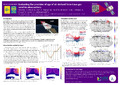
This contribution aims to evaluate the capability of CAIRT to achieve this precision. Synthetic CAIRT profiles of six long-lived species (SF6, CH4, N2O, CFC11, CFC12 and HCFC22) are simulated by the Belgian Assimilation System for Chemical ObsErvations (BASCOE) chemistry transport model, considering CAIRT’s expected measurement errors and spatial resolution. CAIRT AoA observations, derived from the six long-lived species using the method of Voet et al. (2025), are compared to clock tracer AoA, simulated by the BASCOE model, to evaluate the agreement. The analysis is repeated three times by driving the model with the meteorological reanalyses MERRA2, ERA5, and JRA-3Q, respectively, to check if CAIRT precision would be sufficient to evaluate meteorological reanalyses.