Low temperature district heating networks; Dynamic model; Thermal comfort; Control stategies
Abstract :
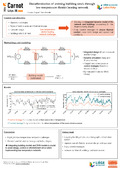
[en] Low temperature district heating networks are a promising solution for decarbonising the existing building stock. However, they present challenges such as operational strategies, network design and the need for building refurbishment. This research focuses on developing an integrated dynamic model of the network and buildings, taking into account the thermal inertia of both, and exploring control strategies to ensure thermal comfort under both design and operational conditions. The methodology involves coupling calibrated building models with a dynamic district heating network model. System design is integrated into the model to optimise network operation. The models, developed in Modelica and simulated using the Dymola platform, use return-temperature-based control strategies based on measured data. Two control strategies are evaluated: pump speed control based on the return temperature at the heat source and at the output of the most critical consumer. The results highlight the importance of integrated building and network models to avoid errors in design, control or refurbishment, particularly for low temperature systems. It also shows that a simple control strategy based on temperature measurement can achieve the desired thermal comfort. Future work will focus on improving model fluidity between design and operation, scaling up the system, investigating other control strategies, and linking building models to a geographic information system.
Disciplines :
Energy
Author, co-author :
Roquet, Mazarine ; Université de Liège - ULiège > Département d'aérospatiale et mécanique > Systèmes de conversion d'énergie pour un dévelopement durable
Dewallef, Pierre ; Université de Liège - ULiège > Département d'aérospatiale et mécanique > Systèmes de conversion d'énergie pour un dévelopement durable
Language :
English
Title :
Decarbonisation of existing building stock through low-temperature district heating network