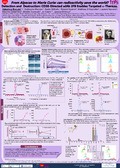
[en] Introduction: Multiple myeloma (MM) is a hematologic malignancy in which malignant plasma cells accumulate in the bone marrow. Although initial treatments effectively reduce tumor burden, minimal residual disease often persists and drives relapse. CD38, highly expressed on myeloma cells, is an attractive target for theranostic strategies that combine molecular imaging with targeted radionuclide therapy1. Here, we present a CD38-directed theranostic approach using a radiolabeled single-domain antibody (sdAb), 2F8, developed in our laboratory2, enabling both early detection and targeted α-particle therapy (TAT)3. Methods: The diagnostic performance of 2F8 has been previously demonstrated. For therapy, 2F8 was conjugated with p-SCN-Bn-DOTA (20 equivalents) to allow labeling with 225Ac (α-emitter) and 177Lu (β-emitter). Radiochemical purity (RCP) and serum stability were evaluated by radio-iTLC and radio-SEC. Binding and internalization on CD38⁺ RPMI cells were quantified by γ-counting. Additionally, biodistribution of [²²⁵Ac]Ac-DOTA-2F8 was assessed in mice to evaluate in vivo biodistribution and pharmacokinetics. Results/Discussion: DOTA conjugation yielded an average of 1.8 chelators per sdAb. Radiolabeling achieved RCP >97% within 30 min for 225Ac and 45 min for 177Lu. Both conjugates remained stable in serum (RCP >90% at 24 h) and retained high CD38 affinity, with limited internalization. Importantly, preliminary mice studies reveal strong and selective tumor targeting, highlighting the potential of radiolabeled 2F8 as theranostic tool. Further preclinical studies evaluating [225Ac]Ac-DOTA-2F8 are underway to confirm therapeutic advantage. Conclusions: The sdAb 2F8 can be efficiently labeled with 225Ac while retaining CD38 specificity. The combination of α-particle cytotoxicity, precise tumor targeting, makes this radiopharmaceutical as a promising strategy to eliminate minimal residual disease and potentially reduce MM relapse. So, what do you think?
Marcion, Guillaume ; Université de Liège - ULiège > Département des sciences biomédicales et précliniques > Méthodes expérimentales des animaux de laboratoire et éthique en expérimentation animale
Withofs, Nadia ; Université de Liège - ULiège > GIGA > GIGA Platforms - In Vivo Imaging - Nuclear Medicine Division
Hustinx, Roland ; Université de Liège - ULiège > Département des sciences cliniques > Médecine nucléaire