Abstract :
[en] Sleep is integral to consciousness, and its disruption, particularly in Insomnia Disorder (ID), offers a unique window into altered cognitive and affective states. ID is marked by hyperarousal and impaired emotion regulation, with neural alterations linked to negative affect and reduced positive mood (Van Someren, 2021). Recent findings suggest distinct ID subtypes based on subjectively-characterized overall distress and arousal levels (Blanken et al., 2019), potentially reflecting divergent neural configurations.
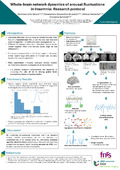
With this study protocol, we will investigate subtype-specific differences in dynamic functional connectivity states and arousal fluctuations in ID. Forty participants aged 20-50 years (20 by group; slightly and highly distressed) will undergo ultra-high-field (7T) MRI. First, by employing a Dynamic Functional Connectivity (DFC) brain-state approach on resting-state fMRI, each temporally resolved connectivity pattern will be assigned to an integrated, segregated, or small-world network state, characterizing the fluctuations of these recurring and transient global brain states. Next, we will explore the causal effect of arousal fluctuations on whole-brain state changes. Arousal levels will be estimated from the BOLD signal of the Locus Coeruleus (LC), a key noradrenergic center, localized through a validated segmentation process and LC-specific MRI sequence (Koshmanova et al., 2023).
We hypothesize that subtype-specific arousal differences will align with different DFC organizational properties, shedding light on ID’s neural mechanisms. Beyond the study of insomnia, this work will potentially advance fMRI-based arousal tracking with implications for clinical, cognitive, and consciousness research.