Abstract :
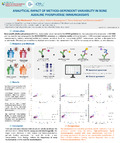
[en] Objective: This study compared the analytical performance and clinical agreement of four
bone-specific alkaline phosphatase (bALP) immunoassays across distinct patient subgroups, as the availability of multiple commercial assays may lead to discrepancies in patient results.
Material and methods: Remnant serum samples from 140 subjects (20 non-CKD controls, 80 CKD patients stratified by GFR, 20 haemodialysed patients, and 20 kidney-transplanted
patients) were analysed using IDS BAP® EIA, IDS-iSYS Ostase®, Access Ostase® and
Liaison XL Ostase®. Results are expressed in µg/L. Samples were also analysed using Hydrasis ISO-PAL 15 electrophoresis, to quantify bone- and liver-specific ALP fractions. Associations were assessed using Spearman’s correlation and agreement was evaluated using Bland–Altman analysis. Absolute and logarithmic differences were used to assess constant and proportional bias, respectively. Differences across clinical subgroups were tested using Kruskal–Wallis's test.
Results: Significant correlations were observed for all assay pairs (Spearman’s ρ = 0.816
0.984). However, Bland–Altman analyses revealed systematic differences between methods. The widest limits of agreement and largest biases were observed in comparisons involving the Liaison XL assay. Healthy controls showed limited dispersion and low bias, whereas CKD and dialysis patients exhibited increased dispersion, particularly for assay pairs involving Liaison XL. Both constant and proportional biases differed significantly across patient subgroups for selected assay pairs, indicating a population-dependent effect on assay agreement (p < 0.05). Proportional biases ranged from 3.96% to 90.69%, depending on the assay pair and patient population. All immunoassays correlated with bALP fraction (Spearman’s ρ = 0.590–0.693). However, visual inspection of comparison graphs showed that samples deviating from the expected correlation were associated with higher liver-specific ALP fractions. Conclusion: Despite correlations between bALP immunoassays, significant biases were observed, indicating limited interchangeability between methods. These discrepancies were amplified in CKD and dialysed populations, underscoring the need for careful clinical interpretation, particularly for patient follow-up, and reinforcing the importance of assay harmonisation and standardisation.