Abstract :
[en] First-year students frequently feel overwhelmed when asked to apply abstraction skills and prefer working on concrete problem aspects where they feel more comfortable. Developing these crucial skills requires students to understand their relevance and consistently practice designing abstract representations while engaging with feedback.
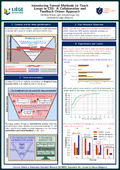
For this purpose, I implemented a top-down framework inspired by the PGK hierarchy, where students solve problems moving from higher to lower levels of abstraction. A key innovation was adding an intermediate abstraction level called "From problem to solution model" to bridge the gap between problem understanding and algorithmic implementation.
At this intermediate level, students create a graphical representation called a Graphical Loop Invariant that visualizes the problem's output and its dependency on input, forming the postcondition. Students then generalize this to represent the solution under construction, encouraging them to visually model the objects and variables they will manipulate in their loops before translating these representations into code.
To promote this problem-solving approach, two main pedagogical setups were developed:
- the Collaborative Design and Build (CDB) Activity: This classroom activity simulates real-life scenarios to motivate student engagement. It dedicates specific time periods for working at each abstraction level and creates a structured chain where teams build upon each other's work, fostering engagement as students realize their impact on the entire process.
- CAFÉ, our Learning Tool: This digital platform supports semester-long practice where students solve problems by submitting both graphical representations and code implementations. The tool provides personalized feedback on students' graphical models and checks consistency between their visual representations and code.
To validate our teaching approach, I investigated four main research questions focusing on student performance evolution, adherence to the top-down approach, preparation effectiveness, and the utility of the Graphical Loop Invariant method.
Data collection involved approximately 100 students annually through surveys, analysis of student work including A/B testing, and learning analytics from the CAFÉ platform.
Key findings revealed that during CDB activities, students actively engage with problems at each abstraction level, though initial work quality is limited due to foundational issues from previous teams. In CAFÉ, students tend to oscillate between modeling and development phases. Many students struggled with understanding or accurately representing Graphical Loop Invariants, particularly when describing variable relationships textually. Therefore, some students felt overwhelmed by the design process, while others successfully extracted useful information to guide their coding.
Based on the results, two main recommendations emerged for teaching Graphical Loop Invariants more effectively. Initially, we should focus solely on teaching students to code using provided Graphical Loop Invariants, emphasizing translation from diagrams to code before progressing to diagram creation. Next, we should teach students to create their own models by recognizing similarities to previously solved problems, preparing them for both CDB activities and examinations.
For CAFÉ improvement, we should provide greater freedom in diagram creation while maintaining relevant feedback through Large Language Model integration. This would translate students' natural language input into constrained formats processable by rule-based systems, maintaining feedback control while reducing AI-associated uncertainty.