[en] Introduction
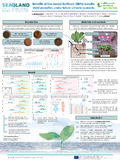
Bio-based fertilisers (BBFs) are part of the circular economy model for Europe to achieve climate neutrality by 2050, decoupling economic growth from resource exhaustion and maintaining agronomic production within planetary boundaries. Here, an experiment performed at the TERRA-Ecotron evaluated the agronomic and environmental performance of four BBFs compared to a synthetic control fertiliser (SYN) under a historic reference and a future climate scenario based on RCP8.5.
Methodology
Four BBFs produced from fishery by-products originating from the main European aquatic regions were tested against a synthetic control fertiliser (SYN) under two contrasted meteorological conditions using controlled environment rooms. The cultivated crop was broccoli, grown in intact soil monoliths extracted from an agricultural field. The agronomic performance was measured as broccoli head diameter, head fresh weight, total plant biomass, and nitrogen and phosphorus use efficiencies (NUE, PUE) were determined. To estimate the environmental impact, soil nitrous oxide (N2O) and carbon dioxide (CO2) fluxes were measured weekly. In addition, leachable soil nitrate (NO3- aq.) was measured by analysing extracted soil pore water and soil microbial activity was assessed on composite samples at four times points after fertilisation.
Results and discussion
While SYN mostly outperformed BBFs in the reference climate, many advantages of SYN disappear in the future scenario where plants fertilised with some BBFs performed better. The systems under BBFs consistently emitted more GHGs than those under SYN, in line with the enhanced soil microbial activity observed under soil fertilised with BBFs. In this experiment, decreased N2O fluxes were also observed in the future climate. In addition, drier future climate seemed to have lowered overall nitrogen mobility within the system, as soluble nitrate in extractable soil pore water also declined. The performance increase of BBFs demonstrates their potential as sustainable alternatives to SYN, particularly under future climatic conditions. However, further research is needed to address climate-induced yield penalties observed for all fertilisers (BBFs + SYN) to ensure agronomic productivity. The results revealed a complex interplay between climate and fertilisers, highlighting the importance of empirical data to anticipate the impact of climate change on agriculture.
Conclusion
Addressing climate-induced yield penalties and improving the environmental footprint of fertilisers will be critical in achieving the goals of the Paris Agreement and ensuring food security for a growing world population. The experimental outcome emphasises the value of testing fertilisers under future meteorological conditions to accurately assess their long-term viability and market potential. Their efficiency under diverse pedo-climatic contexts also warrants further study to ensure upscaling efforts align with regional crop production requirements.