Abstract :
[en] Today, agriculture faces many challenges, including meeting growing demand for food
production and reducing arable land. Among them, weeds cause on average 34% yield
loss because their presence negatively impacts crop growth by competing for
nutrients, space, light and water. To manage weeds, synthetic herbicides are used but
represent several dangers for the environment and for human health. In addition, they
are implicated in the development of pesticide-resistant weeds. As there is a growing
societal demand for greener agriculture, alternative solutions are being explored.
Allelopathy, which refers to the inhibition of the growth of one plant by another due to
the production of allelochemicals, is a promising approach for weed control. Although
the synthesis of allelochemicals by the crop has a metabolic cost, it represents an
efficient way to reduce weeds’ growth and germination. In certain cases, allelopathy
can even be triggered by the detection of weeds by the crop plant. Nevertheless, the
non-self-recognition, underground chemical dialogue and metabolic pathways
involved in induced allelopathy are not fully understood.
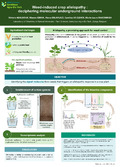
The aim of the present work is to identify the signal molecules from weeds that triggers
an allelopathic response in a crop plant. First, model plants will be selected based on
literature. Culture systems will be established to allow the study of their allelopathic
relationship. The crop plant and weed will be cultivated alone or in co-culture, first
under hydroponic conditions and, in a second phase, in rhizoboxes to shift towards
more realistic edaphic conditions. Weed’s root exudates will be sampled, fractionated
and the bioactive compounds that induce a surge in the production of allelochemicals
by crop plant will be identified. In parallel, a transcriptomic analysis will be conducted.
Ultimately, a better understanding of plant-plant chemical communication will improve
the effectiveness of sustainable weed control.