Hajdu-Cheney syndrome, bone disease, osteoporosis, NOTCH2
Abstract :
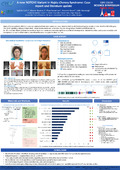
[en] Introduction : Hajdu-Cheney syndrome (HCS) is a very rare (< 1/1,000,000 live births) autosomal dominant connective tissue disorder. HCS results from pathogenic variants in exon 34 of the Notch homolog protein 2 (NOTCH2) gene. The Notch signalling pathway is implicated in bone development and homeostasis by controlling cell proliferation and differentiation. In HCS, truncated Notch2 protein accumulation leads to a continuous excessive signal responsible for developmental skeletal disorders such as acro-osteolysis and osteoporosis, as well as short stature, craniofacial features and systemic abnormalities. We describe a woman and her sister who initially presented with finger deformities, and we subsequently identified a novel heterozygous c.6187delG (p.Asp2063Metfs*5) class IV variant in exon 34 of the NOTCH2 gene.
Method: Our patients’ features were compared to the previous description from the review of Cortés-Martin et al. published in 2020 and we included in our comparison a literature review of 40 additional clinical cases published after July 2020.
Result: Our two patients presented typical clinical and radiological features. However, they did not have osteoporosis or short stature. Their diagnosis was delayed and only confirmed around the age of 40 through genetic testing, based on deformities in the fingers and toes, associated pain, and a positive family history.
Conclusion: A novel NOTCH2 variant was identified in our patients, exhibiting variable expressivity intrafamilially and in comparison to previously reported cases. Due to the rarity of HCS, a delayed diagnosis appeared to be common in this condition. Our review provides new descriptive data improving the latest retrospective descriptive cohort published in 2020 by Cortés-Martin et al. Specific treatment guidelines for HCS are not currently established and need accurate genotype-phenotype correlations. Current therapeutic objectives for HCS are to minimize complications and to reduce pain and osteoporosis. Antiresorptive (biphosphonates, denosumab) and anabolic (teriparatide) agents have been used, without clear evidence of efficacy.
Disciplines :
Genetics & genetic processes
Author, co-author :
COLLIN, Sybille ; Centre Hospitalier Universitaire de Liège - CHU > > Service de génétique
revencu, nicole; UCL Saint-Luc - Brussels Saint-Luc University Hospital > Département de Génétique Humaine
Docampo Martínez, Elisa ; Centre Hospitalier Universitaire de Liège - CHU > > Service de génétique
Bours, Vincent ; Centre Hospitalier Universitaire de Liège - CHU > > Service de génétique
Harvengt, Julie ; Centre Hospitalier Universitaire de Liège - CHU > > Service de génétique
Language :
English
Title :
A new NOTCH2 Variant in Hajdu-Cheney Syndrome: Case report and literature update
Original title :
[en] A new NOTCH2 Variant in Hajdu-Cheney Syndrome: Case report and literature update