Poster (Scientific congresses and symposiums)
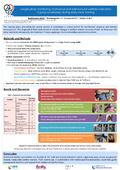
Longitudinal monitoring of physical and behavioural welfare indicators in jump racehorses during early race training
Bonhomme, Maëlle; Boisdenghien, Laura; Couroucé, Anne et al.
20256th Scientific Meeting of the European College of Veterinary Sports Medicine and Rehabilitation
Editorial reviewed
 

Files


Full Text
Poster_ECVSMR_MB_2025-Laura.pdf
Author postprint (902.2 kB)
Request a copy

All documents in ORBi are protected by a user license.

Send to


Details


Keywords :
Equine welfare; racehorse training; Thoroughbred; Behavioural indicators; Welfare monitoring; welfare
Abstract :
[en] Background and Objectives The early training phase in young jump racehorses represents a critical period of physical and psychological demands potentially compromising welfare. This longitudinal field study aimed to track changes in welfare-related measures during training of jump racehorses in France using the Annan et al. (2023) protocol. Material and Methods Welfare measurements were taken from 16 two- and three-year-old racehorses in October 2023, November 2023, and February 2024, prior to being engaged in racing. In addition to management factors, standardised physical and behavioural indicators were recorded, including body condition score, body weight, mucosal lesions, grimace scores, approach tests, and behavioural time budgets. Repeated measures were analysed using linear and logistic mixed-effects models. Results Overall, horses had adequate management conditions (e.g. forage availability, clean water and, bedding). However, turnout and physical social contact remained limited. Body condition score declined significantly over time (p<0.001), particularly in horses with the least training prior to study inclusion. External and internal lip commissure lesions were present in 65% and 75% of observations, respectively. Grimace scores increased significantly by the final assessment (p<0.001). While behavioural time budgets remained stable, a reduction in standing rest time was observed. Horses with physical social contact exhibited lower grimace scores but a paradoxical increase in stereotypic behaviours. No changes were found in approach test responses over time. Discussion and Conclusion Early race training affects measurable welfare indicators. Combining welfare assessment with medico-sportive evaluations could offer valuable insights into training adaptation and athlete management, supporting both performance and well-being.
Disciplines :
Veterinary medicine & animal health
Author, co-author :
Bonhomme, Maëlle ;  Université de Liège - ULiège > Fundamental and Applied Research for Animals and Health (FARAH) > FARAH: Médecine vétérinaire comparée
Boisdenghien, Laura ;  Université de Liège - ULiège > Faculté de Médecine Vétérinaire > Master méd. vété.
Couroucé, Anne;  Oniris, National Vet School of Nantes > Equine Department ; Biotargen, University of Caen Normandie
Votion, Dominique  ;  Université de Liège - ULiège > Fundamental and Applied Research for Animals and Health (FARAH) > FARAH: Médecine vétérinaire comparée
Language :
English
Title :
Longitudinal monitoring of physical and behavioural welfare indicators in jump racehorses during early race training
Publication date :
24 October 2025
Event name :
6th Scientific Meeting of the European College of Veterinary Sports Medicine and Rehabilitation
Event organizer :
European College of Veterinary Sports Medicine and Rehabilitation
Event date :
23/10/2025 - 25/10/2025
Audience :
International
Peer review/Selection committee :
Editorial reviewed
Funders :
F.R.S.-FNRS - Fonds de la Recherche Scientifique
IFCE - Institut Français du Cheval et de l'Équitation
ULiège FSR - Université de Liège. Fonds spéciaux pour la recherche
Available on ORBi :
since 26 October 2025

Statistics


Number of views
29 (0 by ULiège)
Number of downloads
0 (0 by ULiège)

Bibliography


Similar publications


Contact ORBi