Abstract :
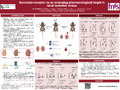
[en] Succinate, a key intermediate of the tricarboxylic acid cycle, accumulates under various metabolic stresses such as ischemia, inflammation, or Warburg metabolism. Efficient mitochondrial and cellular transporters enable its rapid release into the extracellular space, where succinate acts as a signaling molecule through SUCNR1 (Succinate Receptor 1), a G-protein-coupled receptor coupled to both Gi and Gq pathways. SUCNR1 is expressed across numerous cell types, particularly macrophages. Notably, high extracellular succinate levels drive macrophages toward a pro-inflammatory M1 phenotype via Gi signaling, while lower levels promote anti-inflammatory M2 polarization through Gq.
The succinate–SUCNR1 axis is involved in the regulation of renin secretion, platelet activation, erythro- and megakaryopoiesis, adipocyte lipolysis, skeletal myocyte remodeling, and retinal angiogenesis. Its pathological implication has been demonstrated or presumed in a range of conditions including hypertension, diabetic retinopathy, autoimmune arthritis, hepatic fibrosis, hypertrophic cardiomyopathy, cancer progression, and ischemia/reperfusion (I/R) injury.
In experimental I/R models, SUCNR1 activation appears to exert dual effects: beneficial ones, such as stimulating post-ischemic angiogenesis in brain tissues, and deleterious effects by increasing the M1/M2 macrophage ratio, as observed in hepatic injury. Renal I/R injury, recognized as the leading cause of acute kidney injury (AKI), is associated with over two million deaths worldwide annually, representing a major clinical challenge.
To investigate the role of SUCNR1 in renal I/R lesions, we employed a murine surgical model with pharmacological modulation: a potent synthetic agonist (cis-epoxysuccinate) and a selective negative allosteric modulator (compound 4c). This study aims to elucidate SUCNR1’s impact on macrophage polarization and overall renal impact in renal I/R injury, and to assess its potential as a therapeutic target.