Abstract :
[en] Background:
Pediatric Long COVID is an emerging but still under-recognized condition in general practice. Children affected by post-COVID symptoms often present with fatigue, cognitive disturbances, post-exertional intolerance, and significant functional decline, yet remain clinically invisible.
Research questions:
This study aims to characterize pediatric Long COVID through a case-based approach, using semantic standardization via the Human Phenotype Ontology (HPO).
Method:
Out of a cohort of 307 patients followed in general practice for Long COVID between 2021 and 2025, ten children aged 6 to 15 were selected as the youngest subgroup. Each case was assessed using a multimodal protocol combining standardized questionnaires (ComPaRe and COOP/WONCA), recorded clinical interviews, and HPO-based semantic symptom extraction. The approach emphasized lived experience, narrative analysis, and functional assessment.
Results:
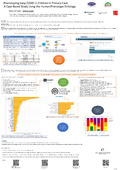
All ten children displayed a complex, multisystem symptomatology—most commonly fatigue and post-exertional intolerance (10/10), cognitive complaints (8/10), sleep disturbances, various types of pain, and signs of dysautonomia. Functional impairment was marked, with significant limitations across physical, cognitive, and social domains. HPO indexing enabled the transformation of narrative symptoms into reproducible phenotypic profiles, supporting both clinical decision-making and patient-family communication.
Conclusions:
This study highlights the potential of general practice to detect and document pediatric Long COVID using a narrative and phenotypic approach. By integrating patient stories with digital semantic tools like HPO, clinicians can give structure and legitimacy to subjective complaints, facilitating earlier recognition and better care for affected children.
Points for discussion:
This work highlights the importance of the added value of technologies that enable faithful, shareable, and reusable documentation during consultation.
This approach aims to reaffirm the central role of primary care in identifying, validating, and supporting pediatric forms of Long COVID, through an alliance between clinical practice, language, and technology.
By combining clinical listening, computerized structuring of symptoms, and the active involvement of the patient and their family, it becomes possible to give shape to experiences that are often fragmented