Abstract :
[en] Mineral oil saturated (MOSH) and mineral oil aromatic (MOAH) hydrocarbons are two sub-classes of petroleum-derived food contaminants [1]. Among them, MOAH pose a particular concern due to their potential genotoxicity, especially compounds with three or more aromatic rings. Currently, a recommended maximum threshold of 2 mg/kg MOAH in fats and oils is applicable [2]. In practice, the analysis of MOSH and MOAH is typically conducted using HPLC-GC-FID, which is preceded by sample preparation steps aimed at extracting, concentrating, and purifying these contaminants.
A significant challenge in MOAH analysis is the presence of matrix-derived interferences that coelute with the MOAH hump, raising the limit of quantification above the regulatory threshold. These interferences primarily consist of natural terpenes, such as squalene and carotenes, which are often present at much higher concentrations than MOAH. The conventional approach to reduce these interferences involves chemical epoxidation, which alters their polarity and facilitates separation during HPLC elution. However, this method can lead to unpredictable MOAH losses, particularly for compounds with a higher number of aromatic rings, due to unintended epoxidation.
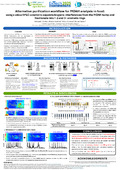
This work presents an alternative purification method for MOAH analysis using the same HPLC system (column and eluents) employed in standard HPLC-GC-FID procedures. The purification efficiency of HPLC with a silica column was evaluated as a substitute for epoxidation. The results demonstrate that this method effectively removes major biogenic interferences, including squalene, carotenes, and their derivatives, which are abundant in oils such as palm and olive oil. Notably, the method significantly reduces MOAH losses, achieving an average recovery of 94% (± 8%) across diverse vegetable oils, including coconut, palm, sunflower, and olive oils. This recovery rate remained consistent across different MOAH sources and concentration levels.
Beyond its purification capabilities, the silica column also enables the separation of MOAH fractions by the number of aromatic rings. This allows for the collection and subsequent quantification of mono-/diaromatic MOAH (1-2 rings) and MOAH with three or more aromatic rings using GC or GC×GC. Such differentiation is particularly valuable given the distinct toxicological profiles of these sub-fractions.
Literature:
[1] Schrenk, D. et al. (2023). Update of the risk assessment of mineral oil hydrocarbons in food. EFSA Journal, 21(9), e08215. https://doi.org/10.2903/J.EFSA.2023.8215
[2] SCoPAFF (2022). Summary Report, 21 April 2022.