Abstract :
[en] Mineral oil saturated hydrocarbons (MOSH) and mineral oil aromatic hydrocarbons (MOAH) are ubiquitous food contaminants with high lipophilicity. As a result, they are commonly found in fats and oils at ppm levels [1]. The standard approach for their analysis involves on-line coupled high-performance liquid chromatography-gas chromatography with flame ionization detection (HPLC-GC-FID), preceded by sample extraction and purification steps, as outlined in the official ISO 20122:2024 method.
In fatty matrices, saponification followed by liquid-liquid extraction is used to remove triacylglycerols (>98% of fats and oils) and improve detection limits. However, two major issues arise with the ISO method. First, it introduces substantial variability (15-25%) in MOAH quantification due to inconsistent partitioning of internal standards during saponification, affecting the ratio between 1,3,5-tri-tert-butylbenzene (TBB) and 2-methylnaphthalene (2-MN) [2]. Although the expected ratio is 1.0, values exceeding 1.15 have been reported, causing discrepancies in quantification. Second, the ISO saponification conditions (60°C, 30 min) are insufficient for high-melting fats, as the method was validated primarily on low-melting vegetable oils.
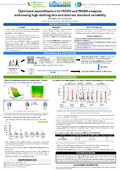
This work presents an optimized saponification method using a microwave-assisted extraction system. By adjusting the time, temperature, and solvent composition, the method effectively saponifies high-melting fats and reduces the TBB/2-MN ratio closer to 1.00. This modification lowered the internal standard ratio from approximately 1.15 to 1.05 while maintaining high recoveries across diverse edible oils [2]. Additionally, a correlation was observed between the fatty acid composition of specific oils and consistently higher TBB/2-MN ratios, although these ratios remained always lower than those obtained using the ISO method.
Literature:
[1] Schrenk, D. et al. (2023). Update of the risk assessment of mineral oil hydrocarbons in food. EFSA Journal, 21(9), e08215. https://doi.org/10.2903/J.EFSA.2023.8215
[2] Bauwens, G., & Purcaro, G. (2024). Improved microwave-assisted saponification to reduce the variability of MOAH determination in edible oils. Analytica Chimica Acta, 1312, 342788. https://doi.org/10.1016/J.ACA.2024.342788