Abstract :
[en] Introduction
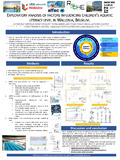
Aquatic literacy (AL), which encompasses aquatic skills, safety knowledge as well as confidence in water, is critical for drowning prevention and lifelong engagement in aquatic activities (Mekkaoui et al., 2022). Despite high drowning rates among children in Europe, regional disparities in AL level remain understudied. The EU-funded ALFAC project addresses this gap by assessing AL in children (aged 6–12 years) across seven European countries, including Belgium and the region of Wallonia. The standardized cross-national ALFAC test protocol combines two questionnaires (i.e., (1) child-reported perceived competence, motivation, and risk perception; and (2) parent-reported socio-economic and aquatic exposure data) with practical assessments in an indoor swimming pool (i.e., 9 isolated aquatic skills [e.g., propulsion, submersion], and a “parcours” test for the most advanced children). In Wallonia, 206 children from 6 to 12 years of age, participated in the study. Descriptive and inferential statistics were carried out as part of the preliminary analysis of the data obtained in this specific population. Exploratory analysis revealed the following interesting results:
1. Perceived competence strongly correlated with actual aquatic skills (r=0.60; p<0.001), particularly for water entry and propulsion.
2. Access to opportunities (i.e., parental swimming ability, prior lessons) was significantly related to children’s aquatic skills total score (r=0.27–0.40; p<0.01).
3. Age, body height and socio-economic status showed moderate associations with aquatic skills (r=0.3–0.43; p<0.01).
4. .
These findings are in accordance with previous studies (D’Hondt et al., 2021; Jidovtseff et al., 2024; Pharr et al., 2018) and underscore the interplay of psychological, environmental, and physical factors in aquatic skills as one part of AL development. This research provides a better understanding of the correlates of AL level in Walloon children. Such knowledge allows to put forward proposals for appropriate action, which include paying particular attention to equitable access to swimming programs, reinforcing the perception of aquatic competence and water safety education.
Keywords : aquatic literacy, water safety, perceived competence, socio-ecological determinants
References
1. D’Hondt, E., Buelens, L., Barnett, L. M., Howells, K., Sääkslahti, A., Costa, A. M., Jidovtseff, B., Mertens, L., & Martelaer, K. D. (2021). Differences between Young Children’s Actual, Self-perceived and Parent-perceived Aquatic Skills. Perceptual and Motor Skills, 128(5), 1905‑1931. https://doi.org/10.1177/00315125211017864
2. Jidovtseff, B., Morgado, L. D. S., Sääkslahti, A., Howells, K., Barnett, L. M., D’Hondt, E., Costa, A. M., & De Martelaer, K. (2024). An Evaluation of the Reliability of the Pictorial Scale of Perceived Water Competence and Its Relationship With Actual Water Competence. Perceptual and Motor Skills, 00315125241248552. https://doi.org/10.1177/00315125241248552
3. Mekkaoui, L., Schnitzler, C., Camporelli, F., Gandrieau, J., & Potdevin, F. (2022). Projet ALFAC : Une recherche européenne pour améliorer l’éducation aquatique - Revue EP&S n°395 - Avril-Mai-Juin 2022.
4. Mekkaoui, L., Schnitzler, C., Sidney, M., Gandrieau, J., Camporelli, F., & Potdevin, F. (2022). Building the Foundation of Aquatic Literacy in 4–6 Years-Old Children : A Systematic Review of Good Pedagogical Practices for Children and Parents. International Journal of Environmental Research and Public Health, 19(10), Article 10. https://doi.org/10.3390/ijerph19106180
5. Pharr, J., Irwin, C., Layne, T., & Irwin, R. (2018). Predictors of Swimming Ability among Children and Adolescents in the United States. Sports, 6(1), Article 1. https://doi.org/10.3390/sports6010017