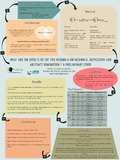
[en] Introduction: Sleep difficulties are commonly reported by patients with depression and can have a detrimental impact on mood. Abstract rumination are a predictor of depression but are also related to insomnia. According to preliminary data Cognitive Behavioural Therapy for Insomnia (CBT-I) is an effective treatment for insomnia which seems to have an impact on depressive mood and abstract rumination. The aim of the present pilot study is to investigate the acceptability and feasibility of a CBT-I with a group format and to test the effects on insomnia, depressive symptomatology and abstract rumination.
Methods : The CBT-I consisted of five 2-hours group psychotherapy sessions. Two groups of 10 and 12 people respectively underwent five treatment sessions with traditional cognitive behavioral therapy techniques, including stimulus control, sleep restriction, sleep hygiene and a cognitive module of dysfunctional beliefs identification. Insomnia, depressive symptomatology and abstract rumination were assessed using self-reported measures, before and after the treatment period. We computed a change score assessing the proportion of individuals showing reliable change (RC) at post-treatment, relative to pre-treatment to rule out the possibility that a difference between two scores was due to a measurement error rather than to the intervention.
Results : Fourteen of the 22 participants completed the entire intervention (4 in the first group and 10 in the second). The fourteen participants were adults aged between 25 and 61 (10 women and 4 men). Pre-post RC analyses suggested significant improvement in insomnia in six participants (43%), significant improvement in depressive symptoms in four participants (28%) and significant improvement in abstract rumination in two participants (14%). Two participants responded to all measures, 4 participants only responded to insomnia and 2 participants only responded to depressive symptoms. Four participants did not respond to the intervention at all (43%). Twelve participants reported satisfaction regarding the intervention but two of them would not recommand this intervention - one of them did not respond to the intervention but the second have reported a significant improvement in depressive symptomatology.
Discussion: A minority of participants reported significant changes in the variables measured - including insomnia which is however the main therapeutic target of the intervention. CBT-I effect on depressive symptoms and abstract rumination does not seem to concern a majority of participants. A high rate of non-response to treatment was observed but this rate is similar to previous studies (approximately 50%). No data on medication were reported; the intervention was short (5 sessions); we have no feedback from people who have stopped the intervention, we have no medium to long term follow-up data and we only have two assessment measures which do not informed us about the variability of the measure. It would be appropriate to reiterate this study with a larger number of clinical subjects and sessions, to multiply the number of assessments over time and to monitor medication intake and include follow-up assessment points.
Disciplines :
Theoretical & cognitive psychology
Author, co-author :
Krings, Audrey ; Université de Liège - ULiège > Département de Psychologie > Psychologie clinique cognitive et comportementale
Dethier, Marie ; Université de Liège - ULiège > Département de Psychologie > Psychologie clinique cognitive et comportementale
Blairy, Sylvie ; Université de Liège - ULiège > Département de Psychologie > Psychologie clinique cognitive et comportementale
Language :
English
Title :
What are the effects of CBT for insomnia on insomnia, depression and abstract rumination ? A preliminary study
Publication date :
September 2024
Event name :
The European Association for Behavioural and Cognitive Therapies
Event organizer :
ACBTS (Association for Cognitive and Behavioral therapies of Serbia)